

Content:
• Big Money Is Made Late, Not Early
• Li Lu On Risk Management
• The Fed Adds Liquidity
• 2026 Could Bring The Biggest AI IPOs Ever
• Markets Hit 20-Year Valuation Peaks
• The Shrinking American Home Problem
• Waymo’s Self-Driving Cars Are Safer
• TSMC Wins The AI Race No Matter What
• Google’s 70/20/10 Rule
• Buffett Sells Stocks For 12 Consecutive Quarters
Big Money Is Made Late, Not Early
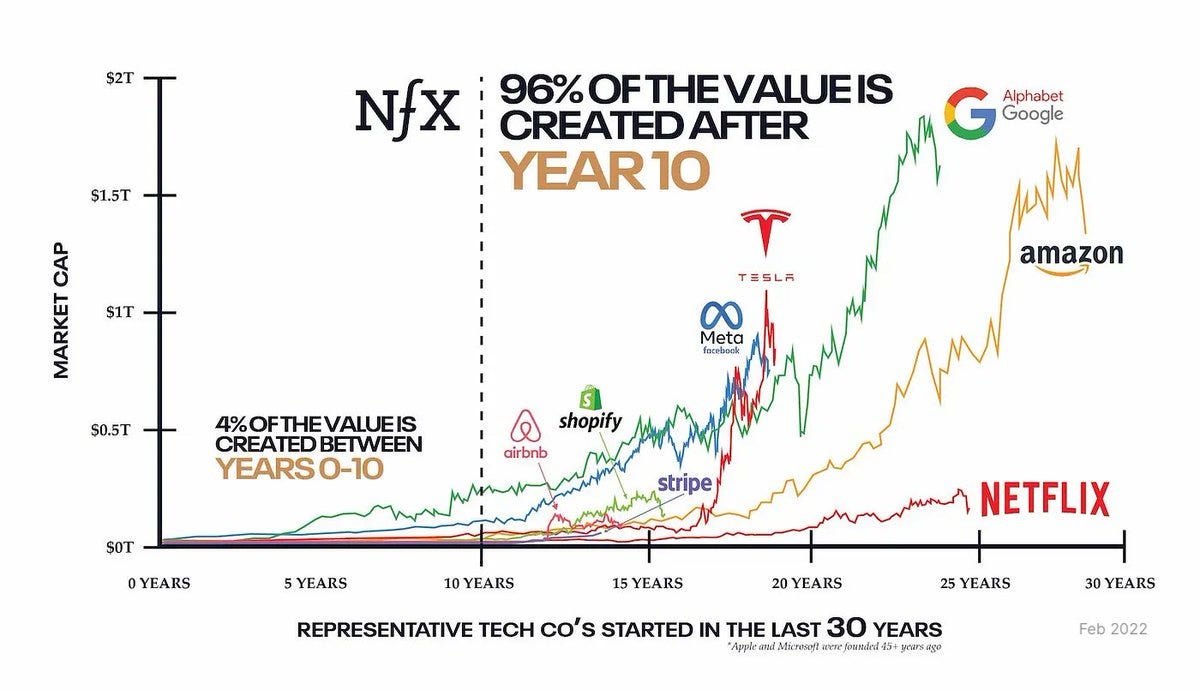
Most value in successful tech companies is created very late. The image shows that only about 4% of the total value is created in the first 10 years, while around 96% comes after year 10. This means the real growth phase often starts when a company is already mature, has scale, and a proven business model.
This highlights the power of patience. Many great companies like Google, Amazon, and Netflix created most of their market value well after their early years. Selling too early can mean missing the biggest part of value creation.
Li Lu On Risk Management
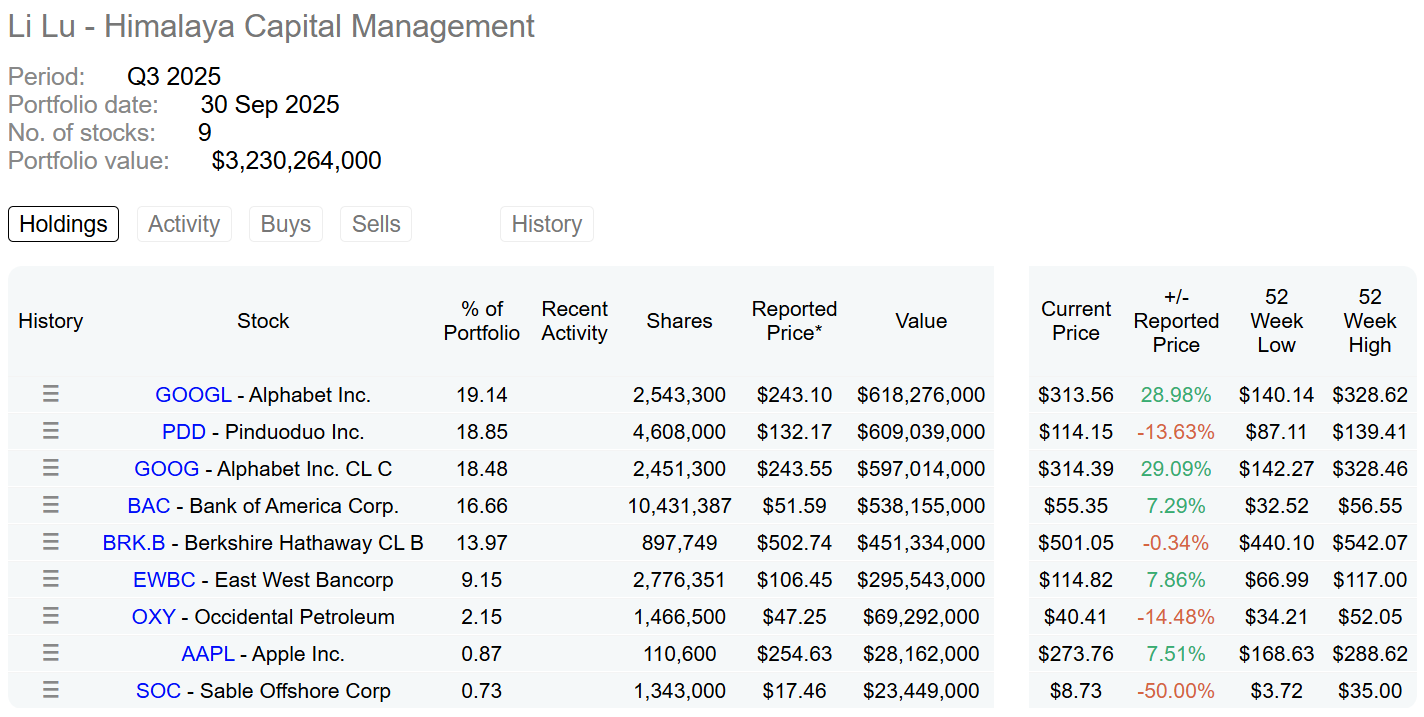
Super-Investor Li Lu on risk management:
"Our primary frontier of risk management isn't wide diversification ... but the quality of the individual businesses, their balance sheets and the people who run them."
The Fed Adds Liquidity
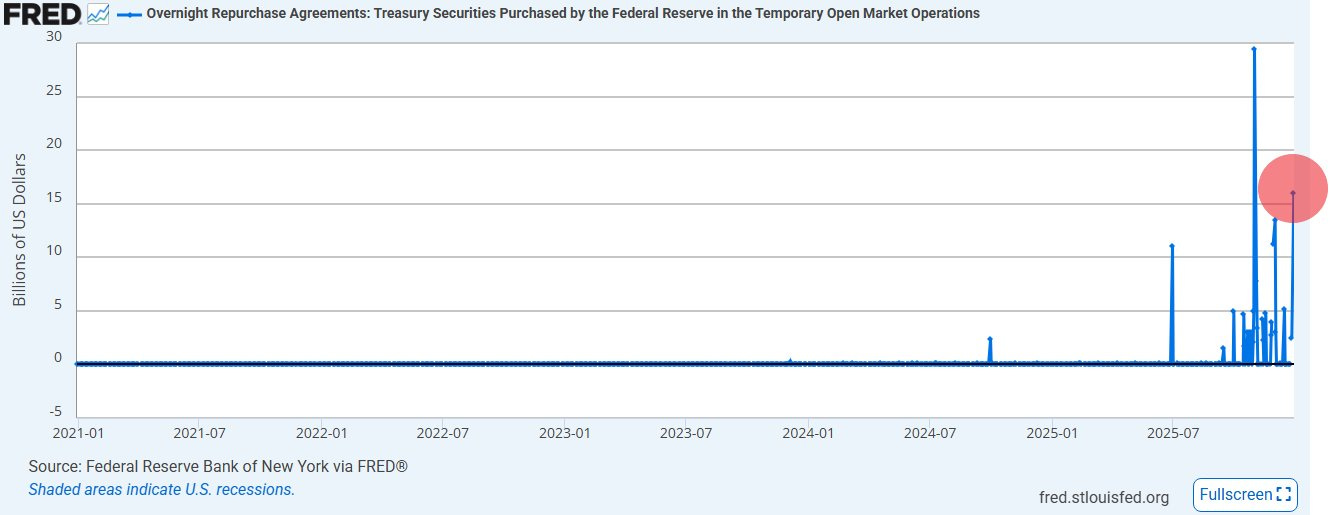
The chart shows a sharp spike in overnight repo operations at the end of 2025, with the Federal Reserve adding about $16 billion of short-term liquidity to the U.S. banking system. Overnight repos are used when banks need quick cash, often because funding conditions become tight. A move of this size suggests short-term stress in money markets, even if the broader system still looks stable.
This is a signal to stay alert. Liquidity support does not always mean a crisis, but it often appears when risks are rising under the surface. Periods like this usually increase market volatility and push investors to focus more on balance sheet strength and cash flow quality.
2026 Could Bring The Biggest AI IPOs Ever
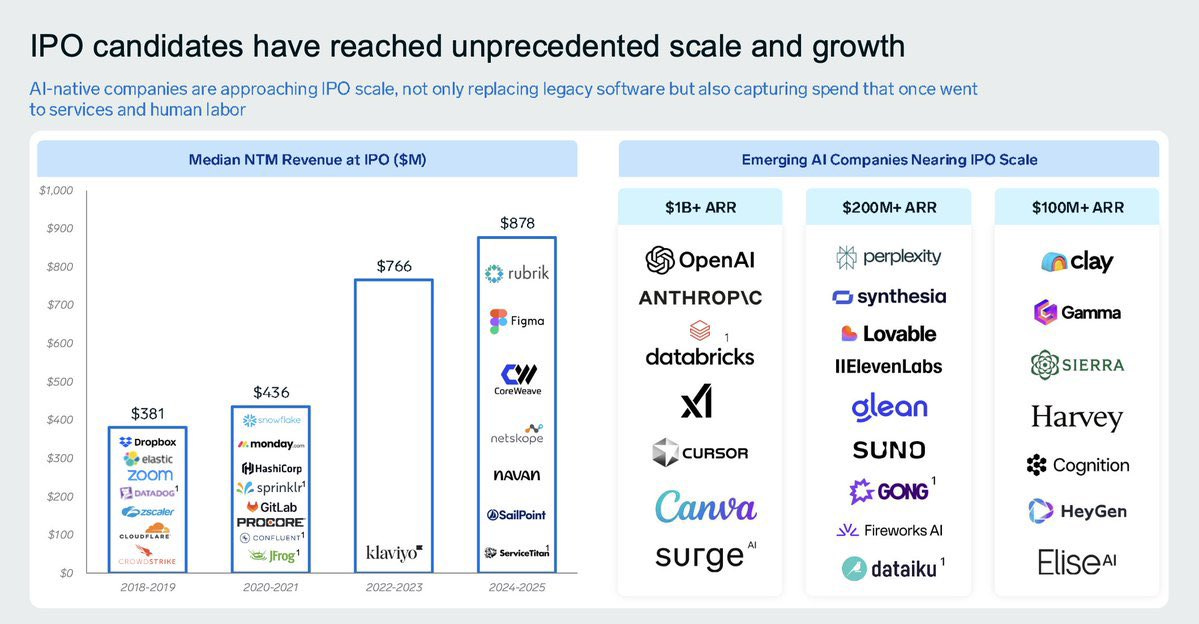
AI companies going public are now much bigger than before. The median revenue at IPO has jumped from $381 million (2018-2019) to $878 million (2024-2025). This is more than double in just a few years.
This means AI companies are staying private longer and growing much larger before their IPO.
Many big names are getting ready to go public soon. Companies like OpenAI and Anthropic have over $1 billion in revenue. Others like Perplexity, Synthesia, and Clay are growing fast with $100-200 million in revenue.
These companies are more mature and proven when they go public compared to earlier tech IPOs. However, valuations might already be high by the time regular investors can buy shares.
Markets Hit 20-Year Valuation Peaks
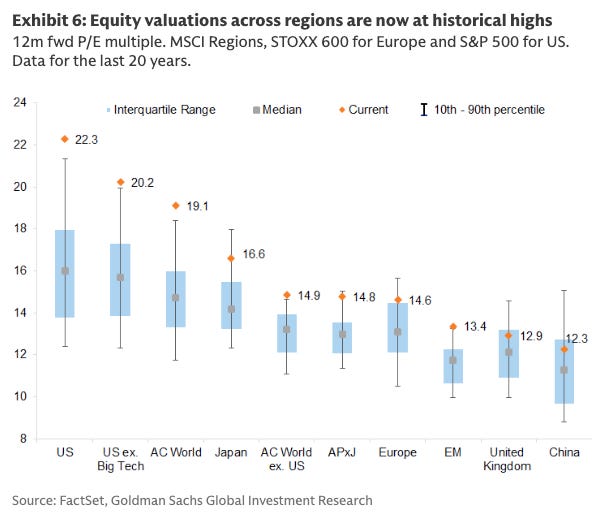
Stock valuations around the world are now at their highest levels in 20 years. The U.S. market leads with a P/E ratio of 22.3, which is the top of its historical range. The U.S. ex. Big Tech stocks are at 20.2.
Most major markets are trading above their median valuations. Europe stands at 14.6, Japan at 16.6, and emerging markets at 13.4. Even China, at 12.3, is within the middle of its 20-year range.
This means stocks are expensive. When valuations are high, future returns are usually lower. Investors are paying more for each dollar of company earnings than they did in the past.
However, high valuations don’t mean markets will crash immediately. They can stay expensive for years, especially if companies keep growing their earnings.
The Shrinking American Home Problem
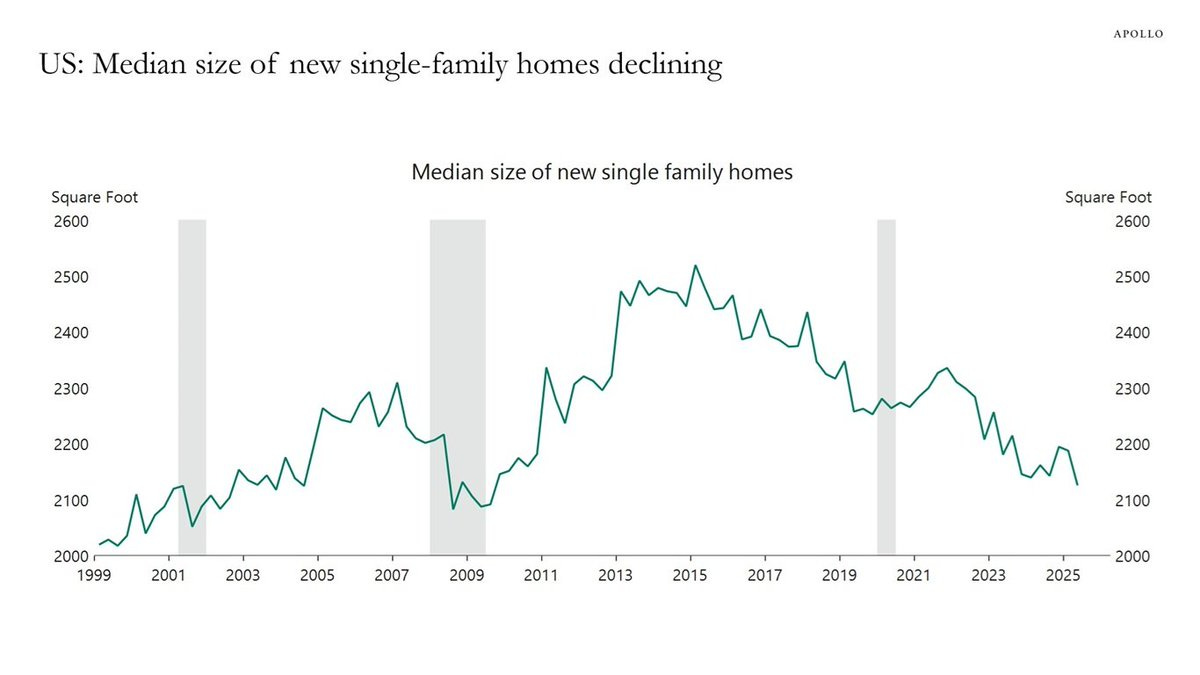
New American homes are getting smaller. The median size of single-family homes peaked at 2,500 square feet in 2015. Since then, it has dropped to around 2,150 square feet in 2025 – a decline of 350 square feet or 14%.
This trend signals important economic concerns. Smaller homes mean less spending on construction materials, furniture, appliances, and home improvements. The housing sector is a major driver of economic growth, so when homes shrink, it creates a ripple effect across many industries.
Why are homes getting smaller? High construction costs, expensive land, and affordability issues are forcing builders to cut back on size. Young buyers can’t afford larger homes anymore, even though they might want them.
For the economy, this is not good news. It means less economic activity in construction, retail, and manufacturing. Companies that sell building materials, furniture, and home goods may see slower growth. It also shows that American living standards are under pressure.
Waymo's Self-Driving Cars Are Safer
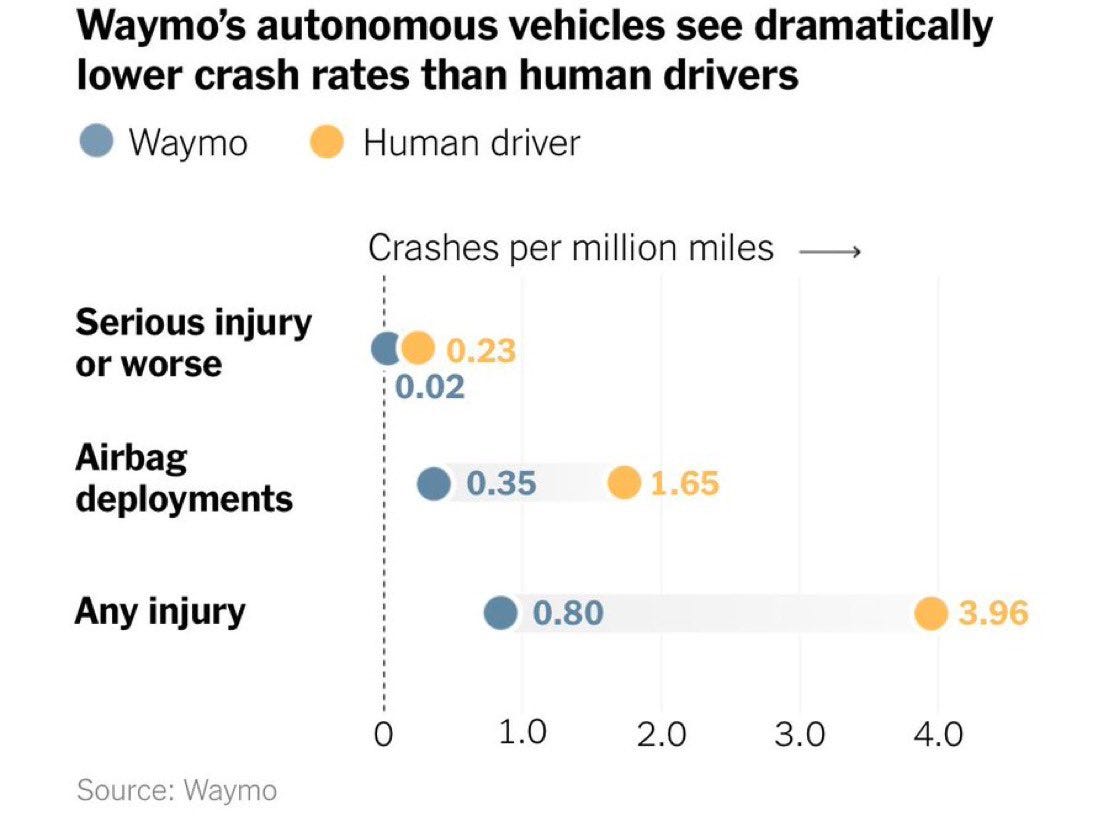
Waymo's autonomous vehicles are dramatically safer than human drivers. The data shows a clear advantage across all crash categories.
For serious injuries or worse, Waymo has only 0.02 crashes per million miles compared to 0.23 for human drivers. That’s more than 11 times safer. Airbag deployments are also much lower – 0.35 for Waymo versus 1.65 for humans, which is nearly 5 times better.
Even for any type of injury, Waymo records just 0.80 crashes per million miles, while human drivers have 3.96. This means self-driving cars are almost 5 times safer overall.
It shows autonomous driving technology is ready for real-world use. As more companies prove their self-driving systems work safely, we could see rapid adoption in ride-sharing, delivery services, and trucking.
The autonomous vehicle market is expected to grow massively in the coming years. Companies developing this technology and those benefiting from it could see strong growth.
Stocks and ETFs to watch: GOOGL (Alphabet/Waymo parent company) - leader in autonomous driving, TSLA (Tesla) - developing Full Self-Driving technology, UBER (Uber) - partnering with autonomous vehicle companies, NVDA (NVIDIA) - provides AI chips for self-driving systems, MBLY (Mobileye) - autonomous driving technology, LIDR (AEye) - lidar sensors for autonomous vehicles, KRNT (Kornit Digital) - autonomous vehicle components, DRIV (Global X Autonomous & Electric Vehicles ETF), IDRV (iShares Self-Driving EV and Tech ETF).
TSMC Wins The AI Race No Matter What
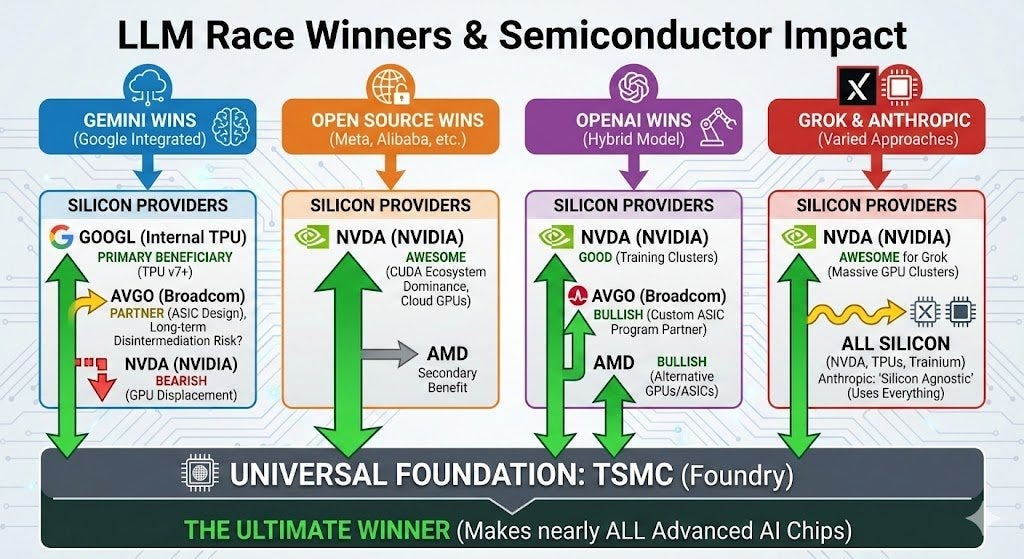
The battle for AI dominance is heating up between Google's Gemini, open-source models, OpenAI, and companies like Grok and Anthropic. But no matter who wins the AI race, there's one clear winner: TSMC, the world's leading chip manufacturer.
Every major AI player depends on advanced chips. Google uses its own TPUs made by TSMC. NVIDIA dominates with its GPUs for training and inference, all manufactured by TSMC. Broadcom designs custom chips for AI companies – also made by TSMC. Even AMD's alternative GPUs come from TSMC.
This means TSMC is the "universal foundation" for all AI development. Whether OpenAI, Google, Meta, or Anthropic wins, they all need TSMC to make their chips. TSMC makes nearly all advanced AI chips in the world.
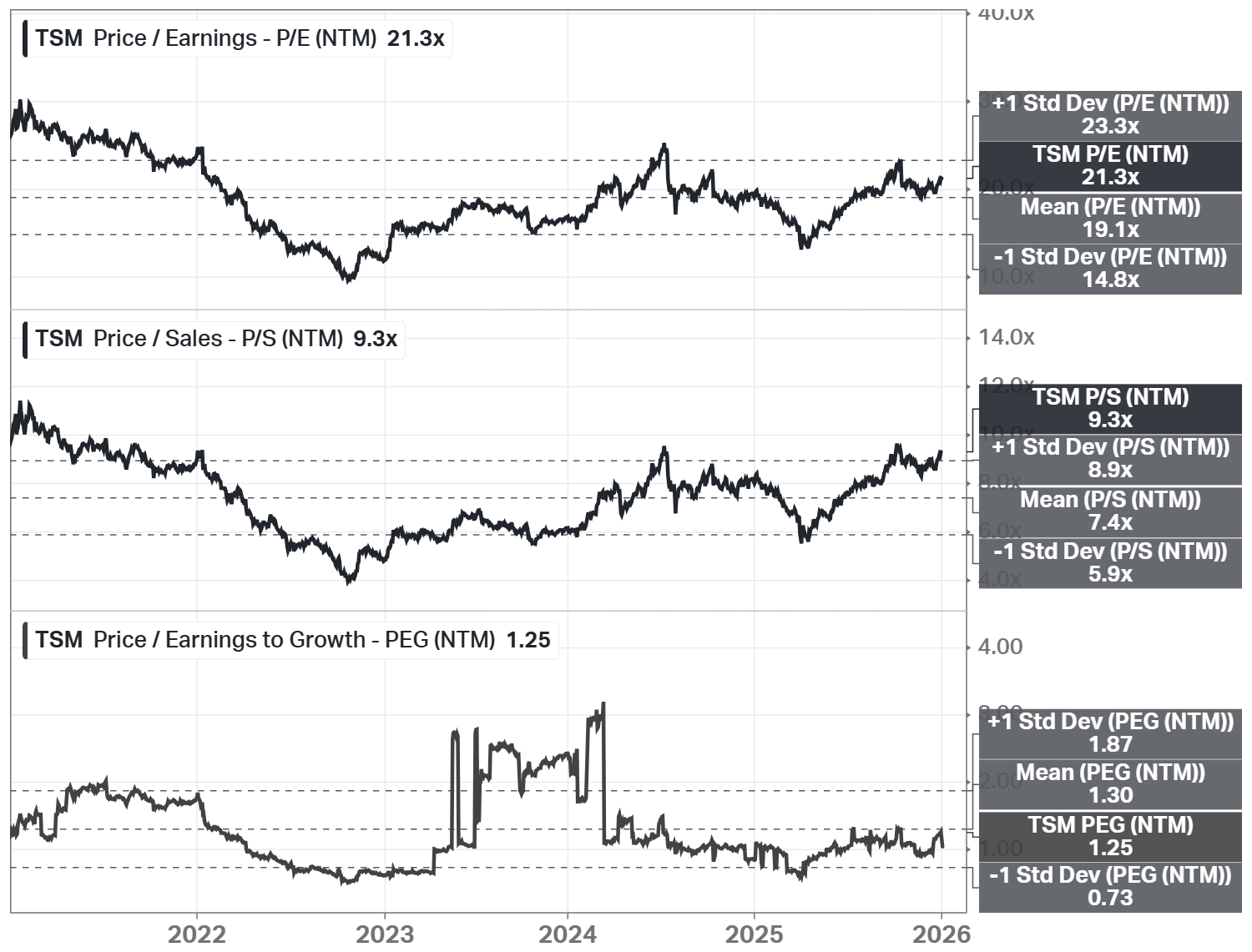
This is crucial. While AI companies compete against each other, TSMC benefits from all of them. As AI spending grows, TSMC’s business grows regardless of which AI model becomes most popular.
Stocks and ETFs to watch: TSM (TSMC) - the ultimate AI infrastructure winner, NVDA (NVIDIA) - leading AI chip designer, AVGO (Broadcom) - custom AI chip design, AMD (Advanced Micro Devices) - NVIDIA alternative, GOOGL (Alphabet) - AI and custom TPU chips, ASML (ASML Holding) - makes machines that make TSMC's chips, KLAC (KLA Corporation) - semiconductor equipment, SMH (VanEck Semiconductor ETF), SOXX (iShares Semiconductor ETF).
Google's 70/20/10 Rule
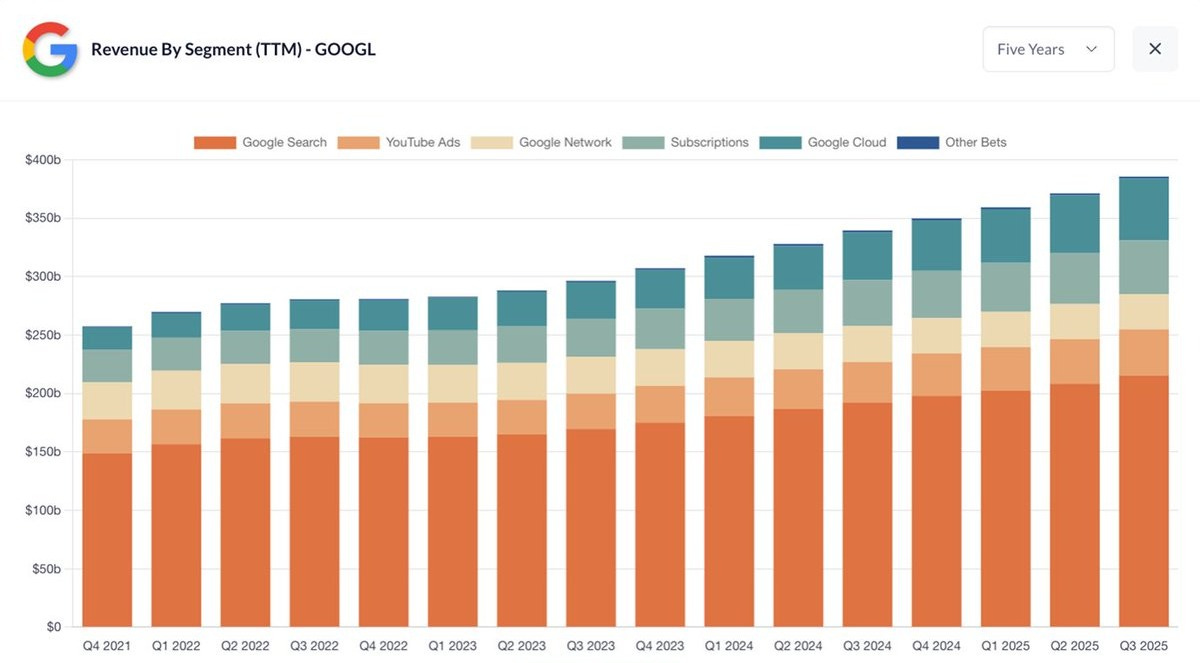
Google follows a simple but powerful strategy called the 70/20/10 rule, created by co-founder Sergey Brin. The company spends 70% of its resources on its core business, 20% on adjacent opportunities, and 10% on wild bets.
This strategy is working incredibly well. Google's total revenue has grown from $256 billion in Q4 2021 to nearly $390 billion in Q3 2025. That's 52% growth in less than four years, with year-over-year growth of 13.54% and two-year growth of 14.05%.
Google Search remains the dominant revenue driver (the 70%), bringing in over $200 billion annually. YouTube Ads and the Google Network provide strong adjacent growth (the 20%). Meanwhile, Google Cloud is exploding as a new revenue source, and subscriptions are growing fast.
The 10% “wild bets” like Android and Waymo (self-driving cars) have become massive businesses. Android now powers billions of devices worldwide, and Waymo is leading the autonomous vehicle race.
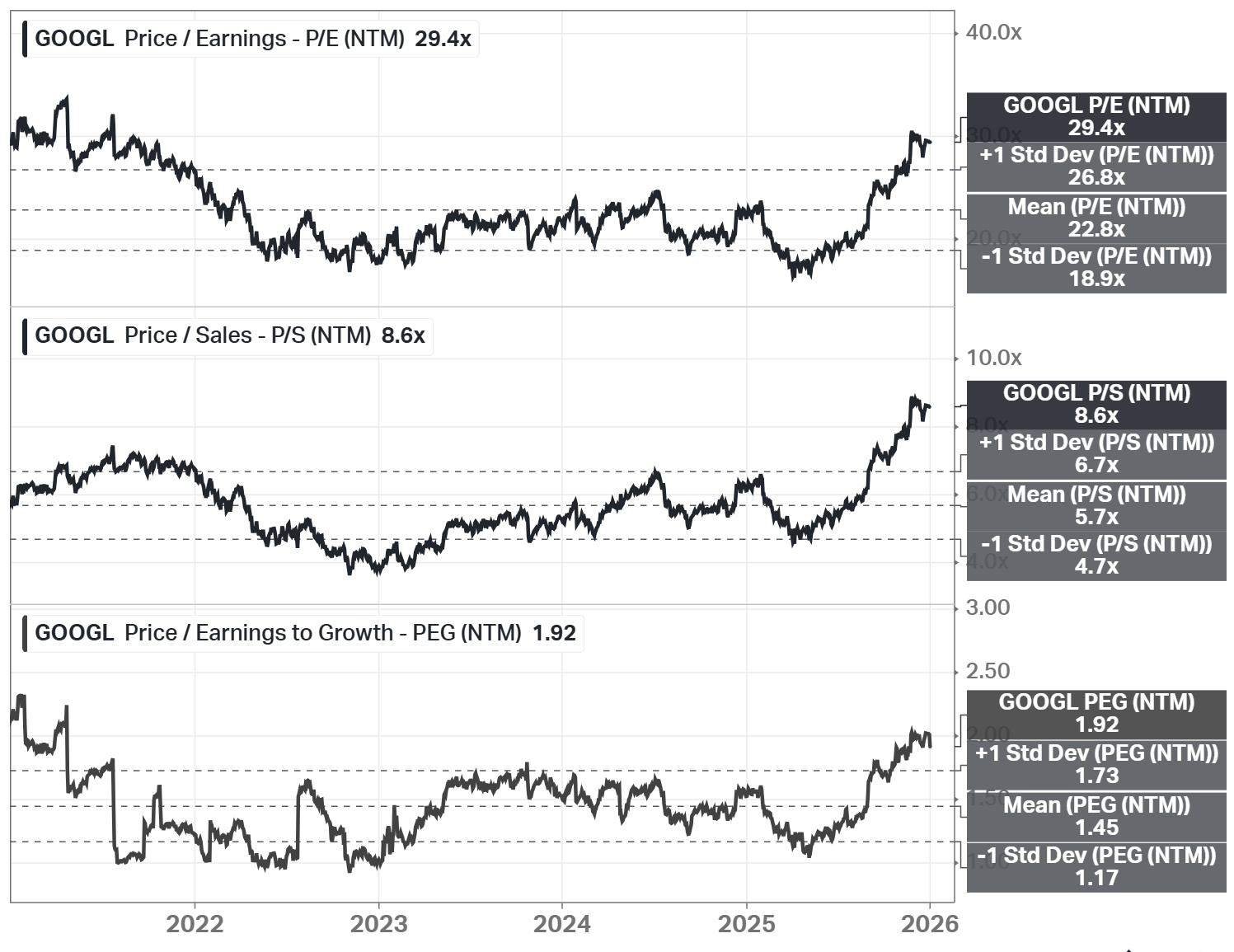
This shows why Google (Alphabet) is such a strong company. The core business funds innovation, which creates the next generation of products. This cycle keeps repeating.
Buffett Sells Stocks For 12 Consecutive Quarters
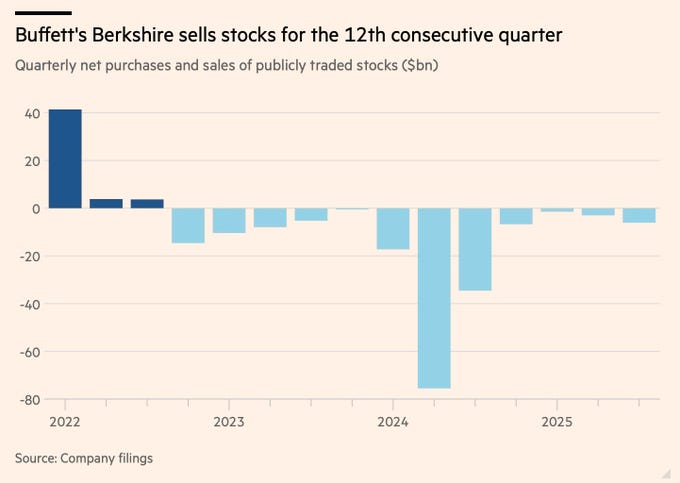
Warren Buffett's Berkshire Hathaway has been selling stocks for 12 consecutive quarters – the longest selling streak in the company's history.
Analyst’s Note:
Since Warren Buffett is no longer the CEO of Berkshire Hathaway, I still use his name here, since it was still his decision.
In early 2022, Berkshire was buying over $40 billion worth of stocks per quarter. But since mid-2022, the company has been a net seller every quarter. In Q4 2024, Berkshire sold a massive $75 billion in stocks – the biggest quarterly sale ever.
Throughout 2023, 2024, and into 2025, Buffett has been steadily reducing his stock positions. Berkshire now holds a record $325 billion in cash and short-term Treasury bills. This is the largest cash pile in the company's history.
What does this mean? Buffett typically sells when he thinks valuations are too high and buys when there’s a market crash or good opportunities. His selling streak suggests he’s waiting for better prices or preparing for a market downturn.
This is not a financial or investing recommendation. It is solely for educational purposes.
Koyfin was used for charts in this analysis. Use this URL to get a special pricing offer of 20% off all Koyfin plans.
you may have misspelled TSMC there. i think it's spelled A S M L.
Thanks for the notes, Dan!