


TL;DR: On (ONON) reported its highest gross margin ever and raised its margin outlook: 65.4% (best in sportswear), with full-year gross margin guidance raised to 65%. Still, the stock fell on weaker US demand, HOKA (DECK) and a rebirth of Nike (NKE), the strong franc, and 6.4% short interest. It now trades at 17.3x forward earnings against a 53x mean since IPO. Consensus expects ~25% annual EPS growth over the next 5 years; the PEG ratio is now 0.70. The strategy is premium-only, DTC-first, beyond running shoes, and sustainability. On sells its shoes at full price; the innovation pipeline and the athletes support the premium prices. ROIC is 17.1% and rising while the company is still building stores and warehouses. I see a running brand that becomes a sportswear house with a young audience. The stock trades below my Bear Case fair price, inside the accumulation zone. The full model is at the end of this post.
Investment Thesis
On reported Q2 2026 results with 21.6% constant currency growth, its highest gross margin ever, and a raised margin outlook. As a result, the stock fell 14% on the report; YTD decline is 33%. The business and the price now tell two different stories, and this post is my intention to explain which one is correct and why.
Growth remains strong where it matters. Direct-to-consumer (DTC) grew +34.3% constant currency, Asia-Pacific +54.7%, and full-year guidance expects low-20% constant currency growth with gross margin raised to 65%.
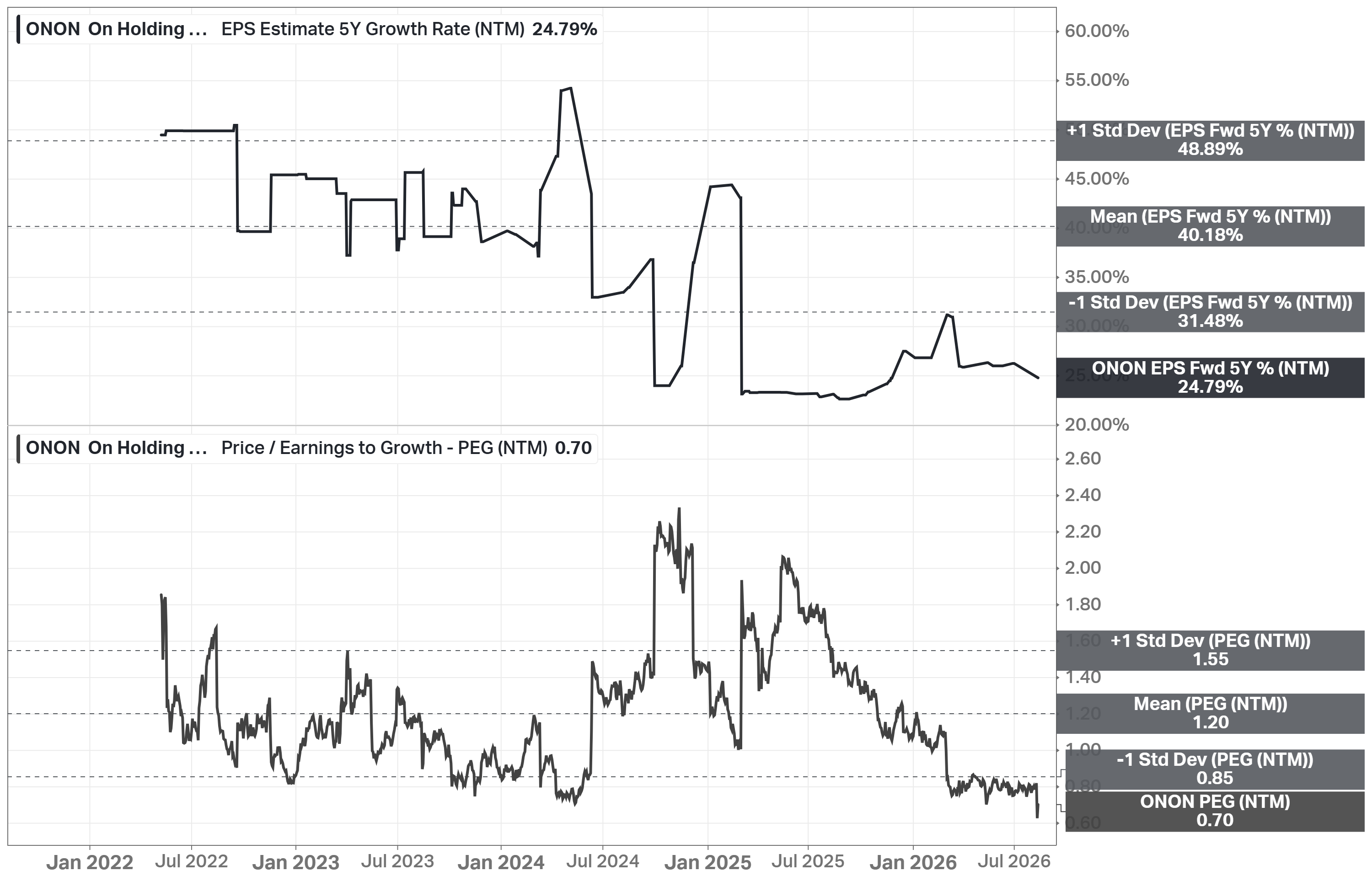
Valuation is low relative to growth. Consensus expects ~25% annual EPS growth over the next 5 years. The PEG ratio is now 0.70.
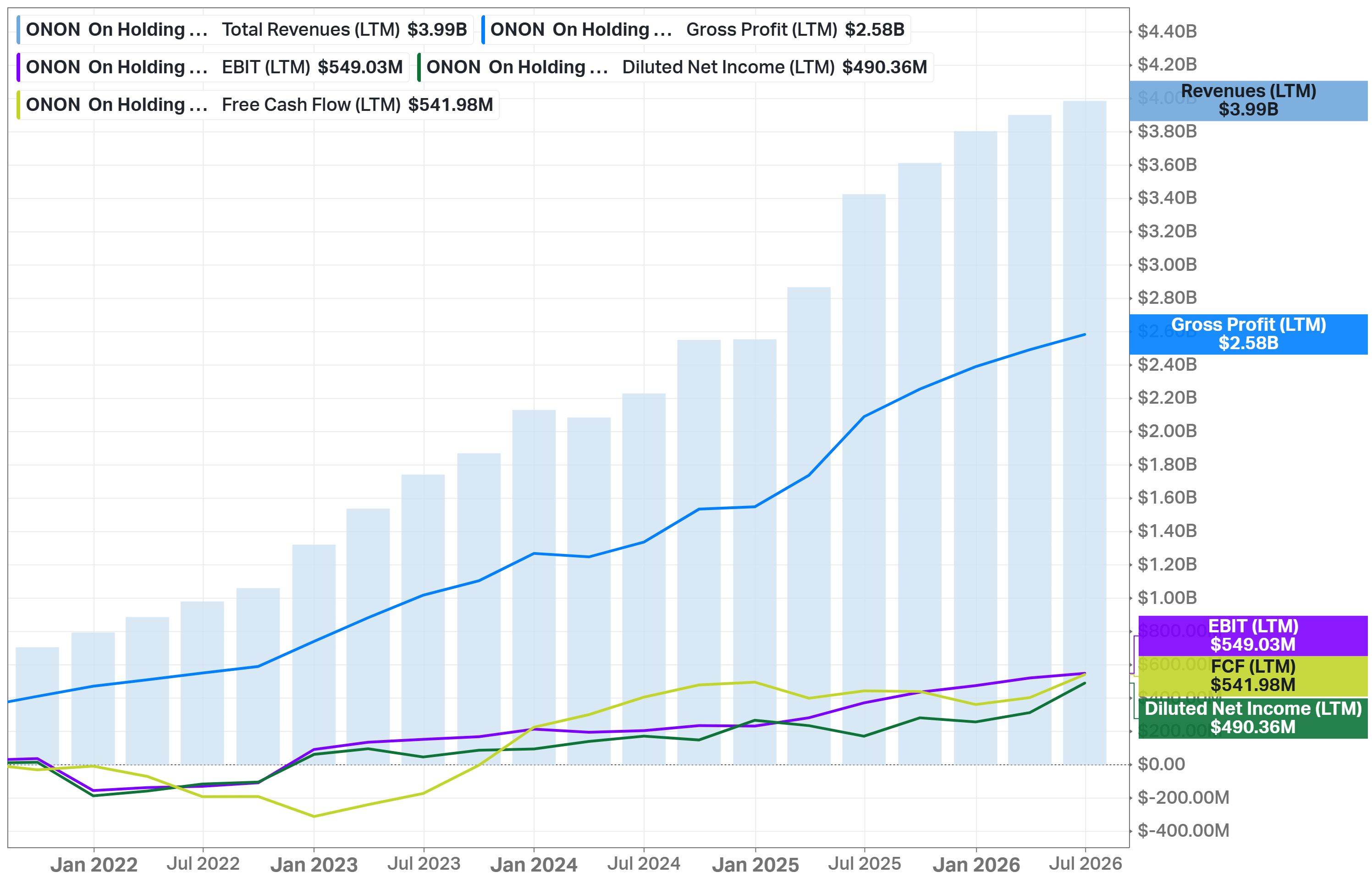
The fundamentals remain strong. 65.4% gross margin (best in sportswear), 12.3% net margin, 17.1% ROIC, $542M of FCF, and ~$0.8B of net cash.
The stock derating has already happened. 17.3x forward earnings against a 53x mean since IPO - around the -1 standard deviation band. Despite the fact that forward EPS estimates have continued to rise.
The bear case: weaker US demand, HOKA and a rebirth of Nike, the strong franc, and 6.4% short interest. My model takes this into account by capping future growth at 20%. Even then, the stock trades below my Bear Case fair price.
Analyst’s note:
All prices and multiples in this post are in USD, because ONON is the NYSE listing. On itself is a Swiss company and reports in CHF.
Company Overview
Next Earnings Date: 10 Nov 2026 (estimated)
Market Cap: $10.36B
Sector: Consumer Discretionary | Industry: Textiles, Apparel and Luxury Goods
Type: Mid Growth
Short Interest: 6.4%
On Holding AG is a Swiss premium sportswear company from Zurich. It was founded in 2010 by former professional triathlete Olivier Bernhard together with David Allemann and Caspar Coppetti. Roger Federer has been an investor and product partner since 2019. CloudTec cushioning is their core technology. Newer technologies include the LightSpray one-piece upper (a robot sprays the shoe in minutes) and the SURREAL superfoam that debuts in the Cloudsurfer 3 later this year.
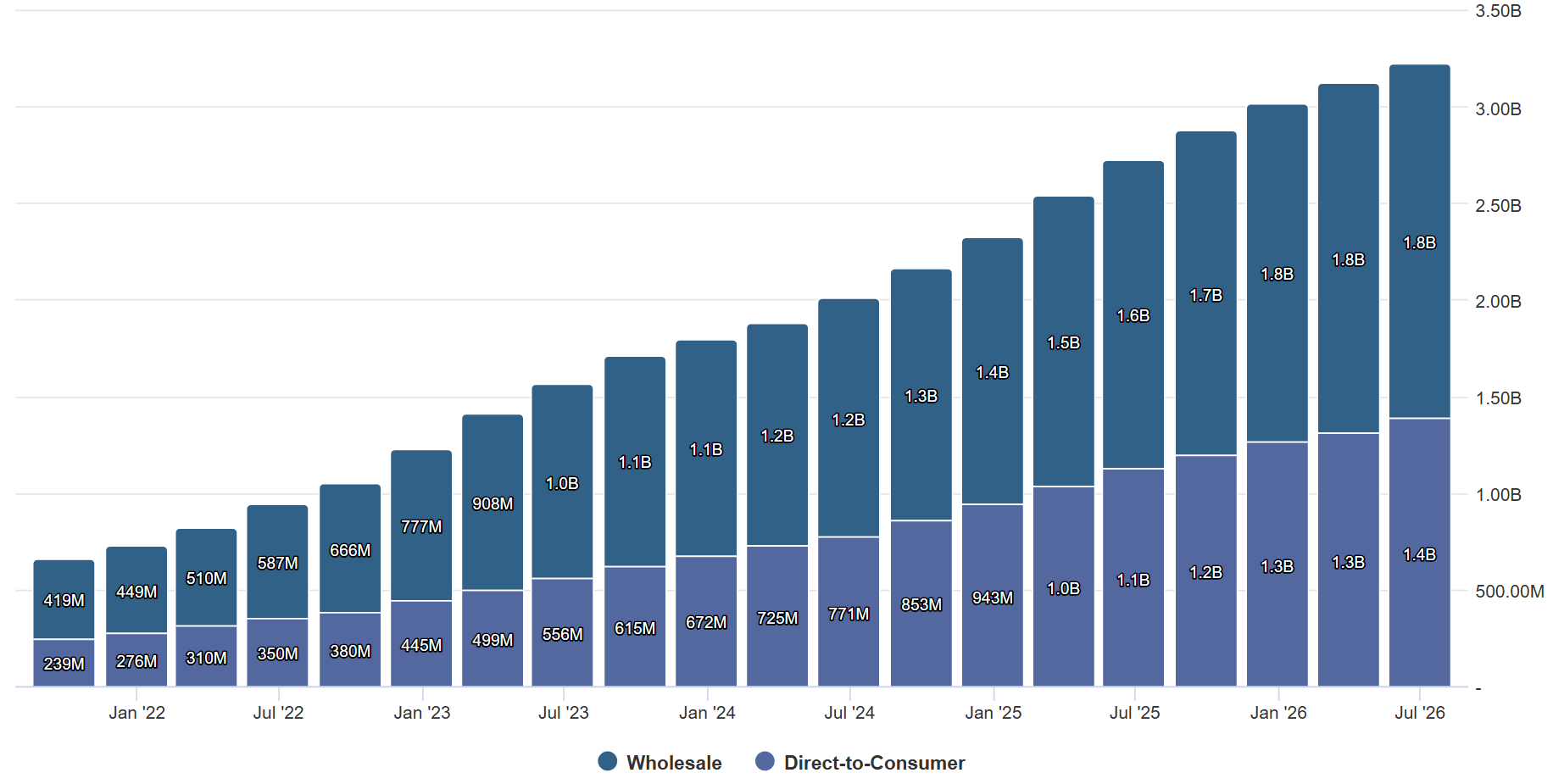
The product range covers road running (Cloud, Cloudsurfer, Cloudmonster, Cloudrunner), racing (Cloudboom Strike, LightSpray), trail (Cloudvista, Cloudultra), tennis (THE ROGER line), training shoes, lifestyle (Cloudtilt, Cloudnova), plus a fast-growing apparel and accessories business. Distribution is a mix of premium wholesale and DTC: own stores, e-commerce, and the app. DTC is 45.7% of sales and rising - the main source of the high gross margin.
Market Overview
The primary question I see for On is whether the Q2 slowdown is real demand weakness or mostly a temporary effect. The answer determines if 17x forward earnings is an investment opportunity or rather a fair price for a slowing business.
Global sportswear is a slow-growth market where the leader stumbled. Nike spent 2 years fixing itself and is only now recovering; Adidas is still in a turnaround. The premium running niche they both neglected was taken over by two brands: HOKA and On. From my perspective, the difference between those two matters a lot. HOKA scaled fast through run-specialty stores and is now decelerating - consensus expects only 7.2% EPS growth for Deckers (HOKA) over the next 5 years. On took the other (slower) road with its own stores, its own app, and full price. And On is the one still compounding at 20%+.
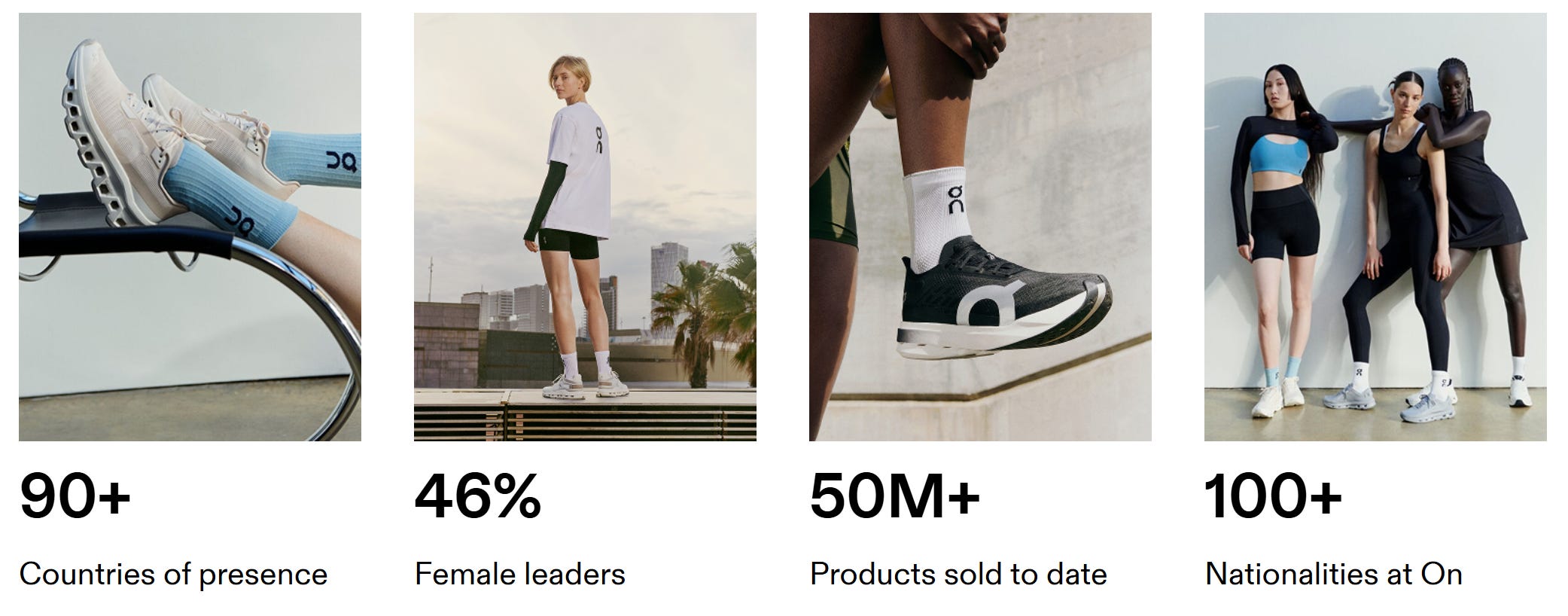
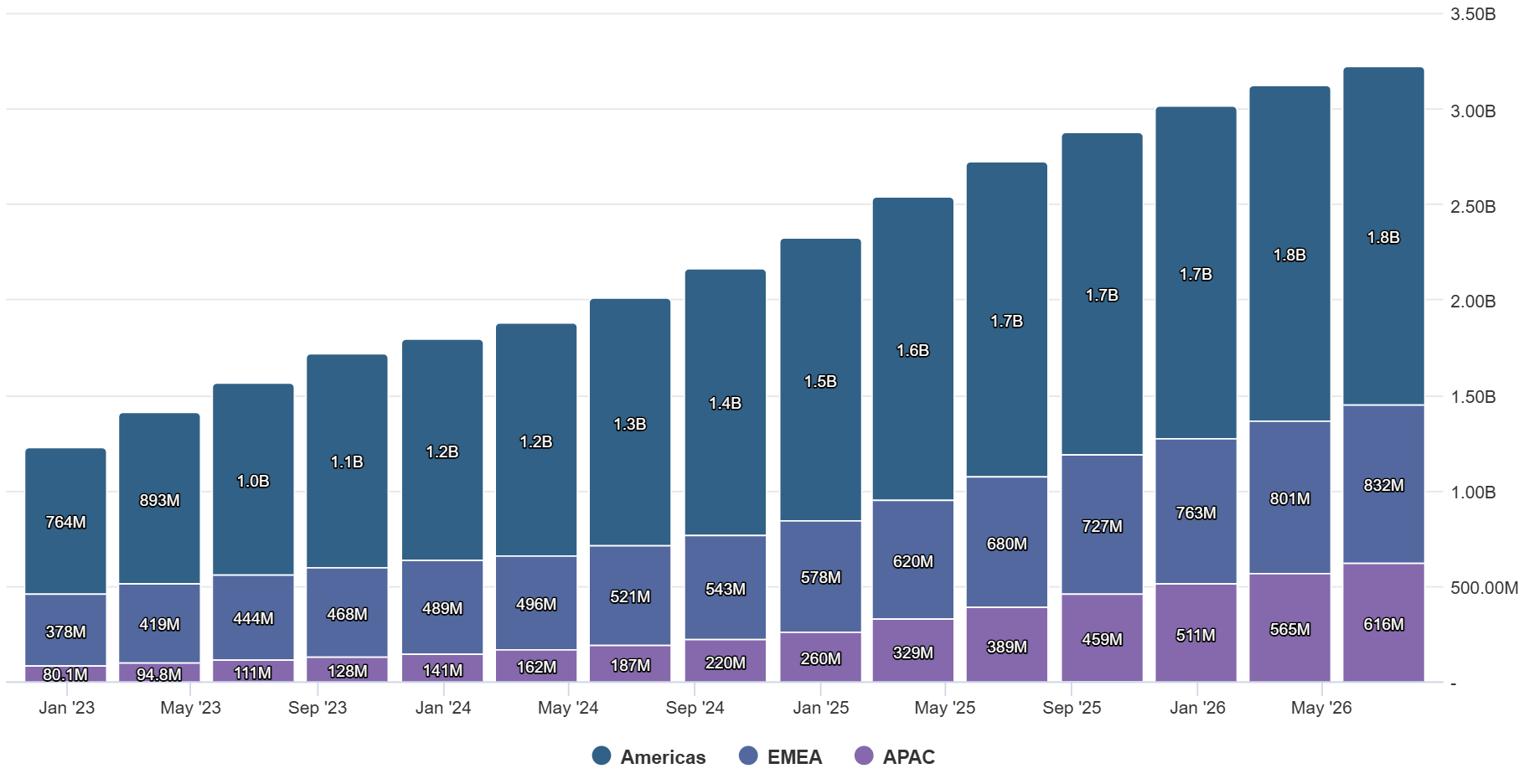
The brand is still early in its growth. On sells in 90+ countries but has sold only 50M+ pairs of shoes in its entire history. To compare, Nike sells that amount in a season. Global brand awareness is only 30%. This is the growth story - most future customers have not met the brand yet. Where awareness is already high, the results follow. Asia-Pacific grew +54.7% constant currency in Q2 (now over 20% of sales) - Japan, South Korea, and Greater China all performed well. The first stores in Sao Paulo and Copenhagen were opened only weeks ago. I see there is still a lot of room to expand geographically.
The customer mix indicates that we are still in the early stages. Consumers under 34 buy the Cloudtilt as streetwear, not as running equipment. Apparel grew +56.2% constant currency and accessories +102.2%, both from small bases. This is how a running brand becomes a sportswear house: shoes build the brand, apparel monetizes it at scale. To compare, Lululemon (LULU) needed 20 years for the same transition in the opposite direction.
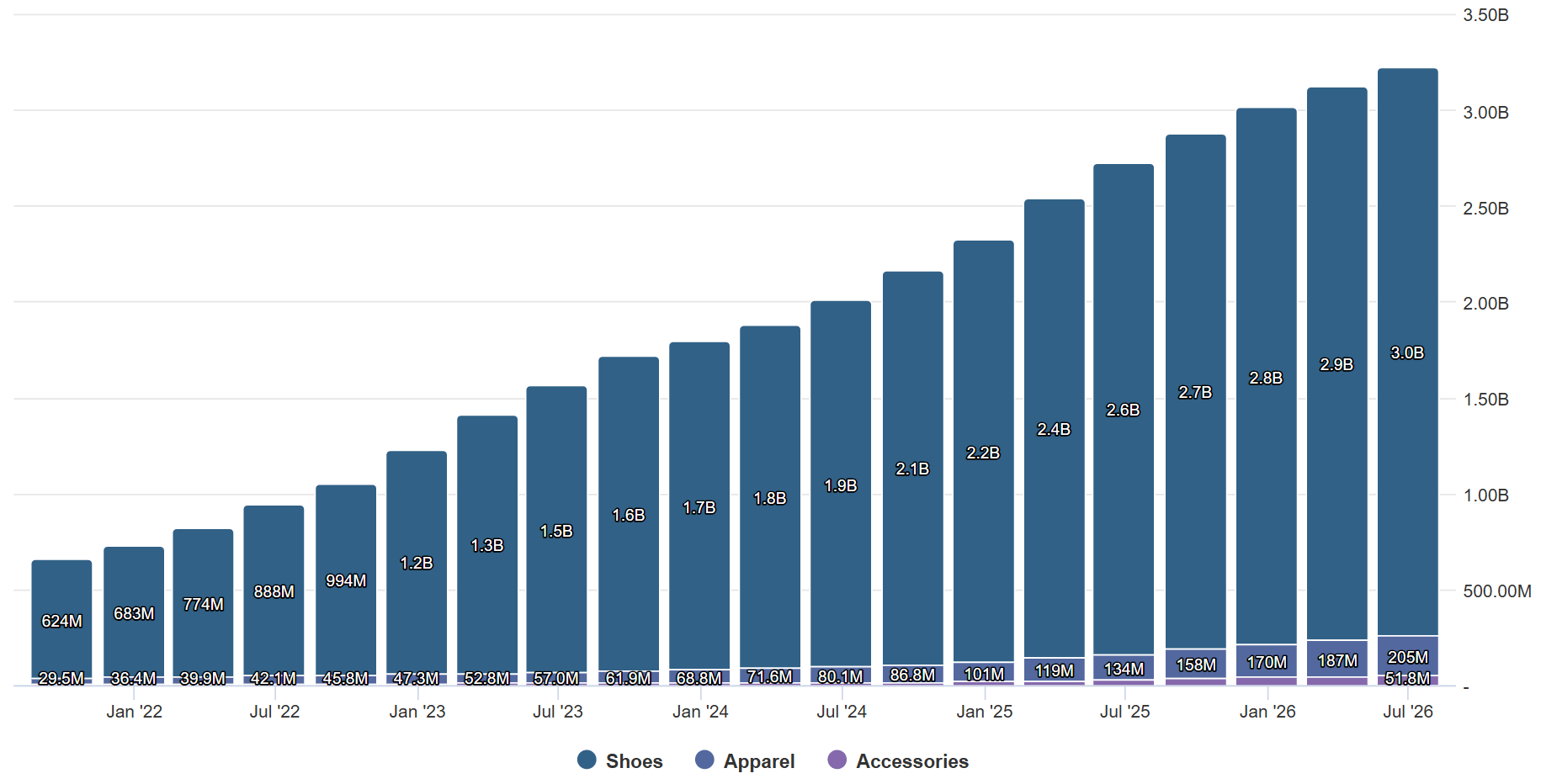
Shoes became a fashion category with a performance core. The winners are the brands that own a recognizable silhouette. On owns two (the Cloud and the Cloudtilt) and sells them at full price, while most of the industry discounts.
Analyst’s note:
Personally, I run regularly. Right now my primary running shoes are from Adidas, but I’ve been looking at On for a long period of time.
Economic Moat
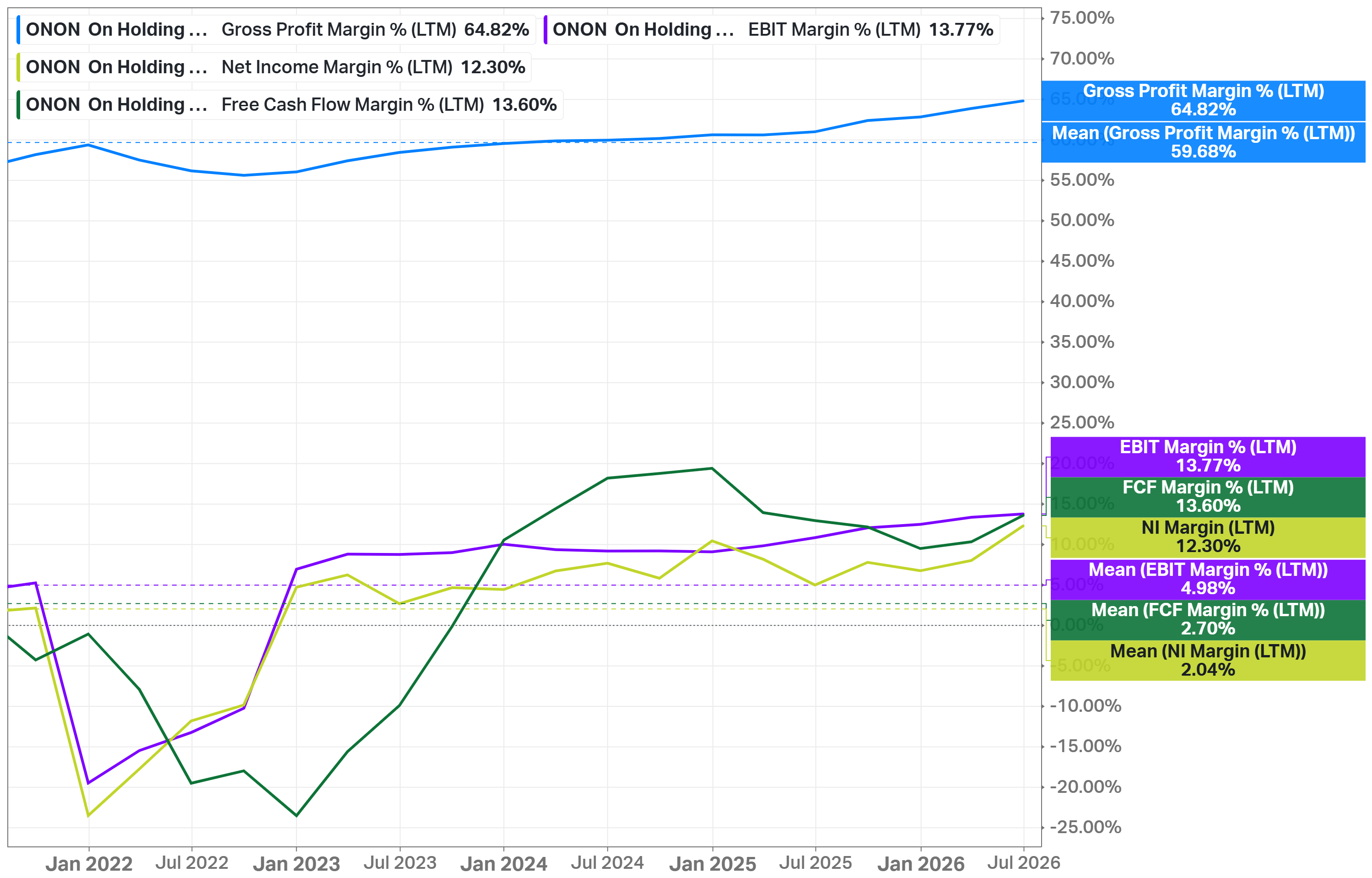
As I see it, the moat is narrow but real. It is shown in one number: 65.4% gross margin. To compare, Nike is in the mid-40s, Deckers (HOKA) in the mid-50s, Lululemon just under 60.
Let’s see what produces this margin. Full-price discipline: On sells out instead of marking down, even in a promotional market. Next, the DTC mix of 45.7% of sales removes the middleman on nearly half the business.
The innovation pipeline protects the price point. CloudTec created the brand in 2010. The first prototype was pieces of garden hose glued to an outsole; the improved version won the ISPO BrandNew award before the company had real revenue. Today the stack includes thirteen named technologies: the CloudTec family (Phase, Sphere, Connect), the Helion superfoams, the Speedboard plate, Missiongrip for trail, and now SURREAL, which ships in the Cloudsurfer 3 later this year. A premium brand needs a reason to charge premium prices - On keeps creating new ones.
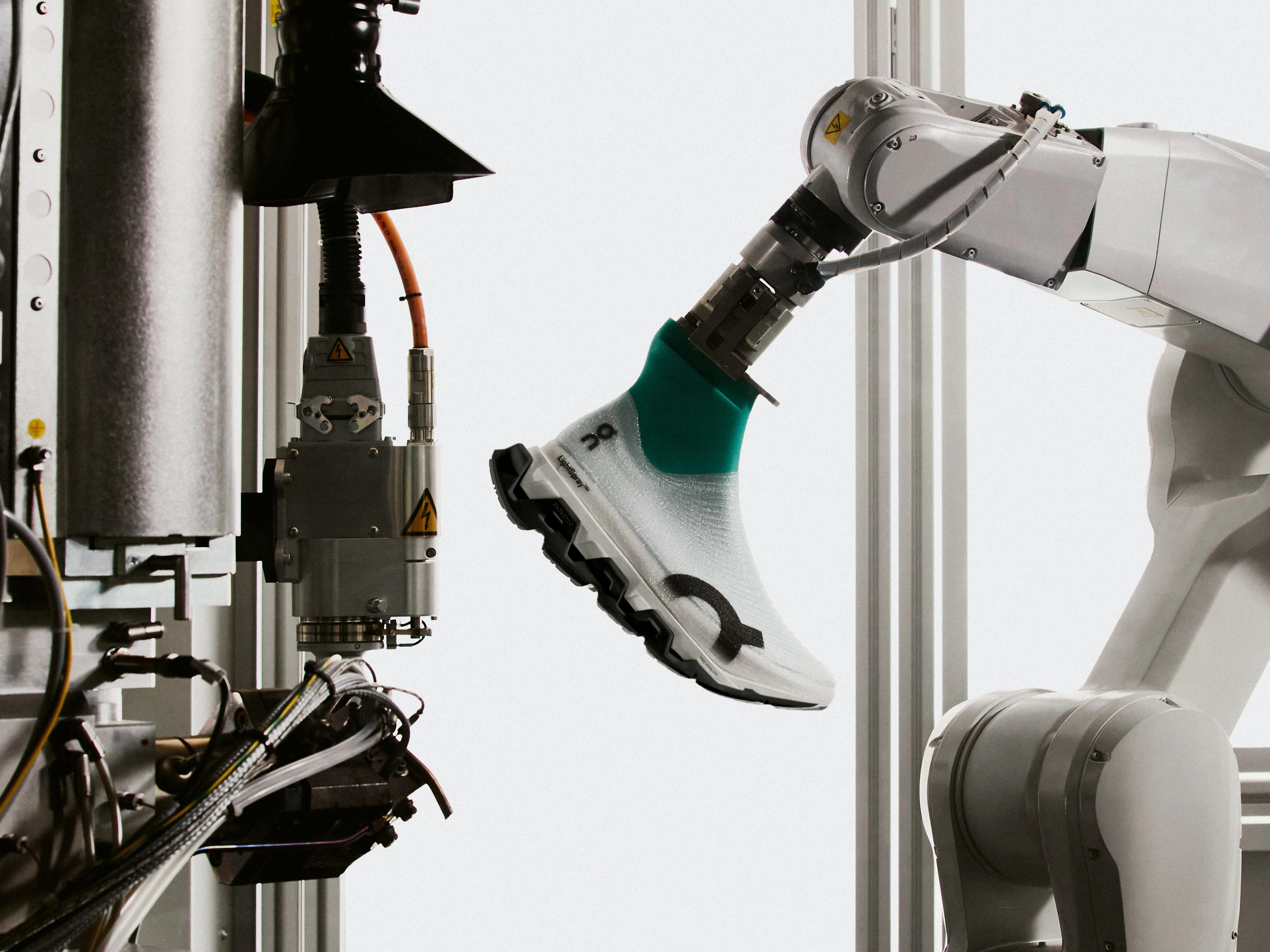
LightSpray is a special case. I see it as a manufacturing moat, not just a shoe. What is it? A robot arm sprays the entire upper in minutes; there is no stitching and no assembly line. The process produces up to 65% less CO2 than a conventional racing upper; production can happen close to the customer instead of in an Asian factory. A foam recipe can be copied in a season, but a robotic production process is much harder to copy. LightSpray started as an elite racing product and now is rolling into core franchises like the Cloudmonster.
Worth mentioning also the athletes. On Labs in Zurich puts elite athletes in the same room as the engineers. Hellen Obiri wins marathon majors in the shoes, Kristian Blummenfelt validates them in triathlon, the On Athletics Club builds track credibility, and Iga Swiatek and Ben Shelton carry the tennis line after Federer’s playing career. For a performance brand, podium wins are the best advertising. The under-34 audience that buys the Cloudtilt follows the same athletes on social media.

Every margin line confirms the model works: gross margin 64.8% LTM against a 59.7% 5Y mean, EBIT margin 13.8% against 5.0%, net margin 12.3% against 2.0%, FCF margin 13.6% against 2.7%. All four are at or near record highs and continue to rise.
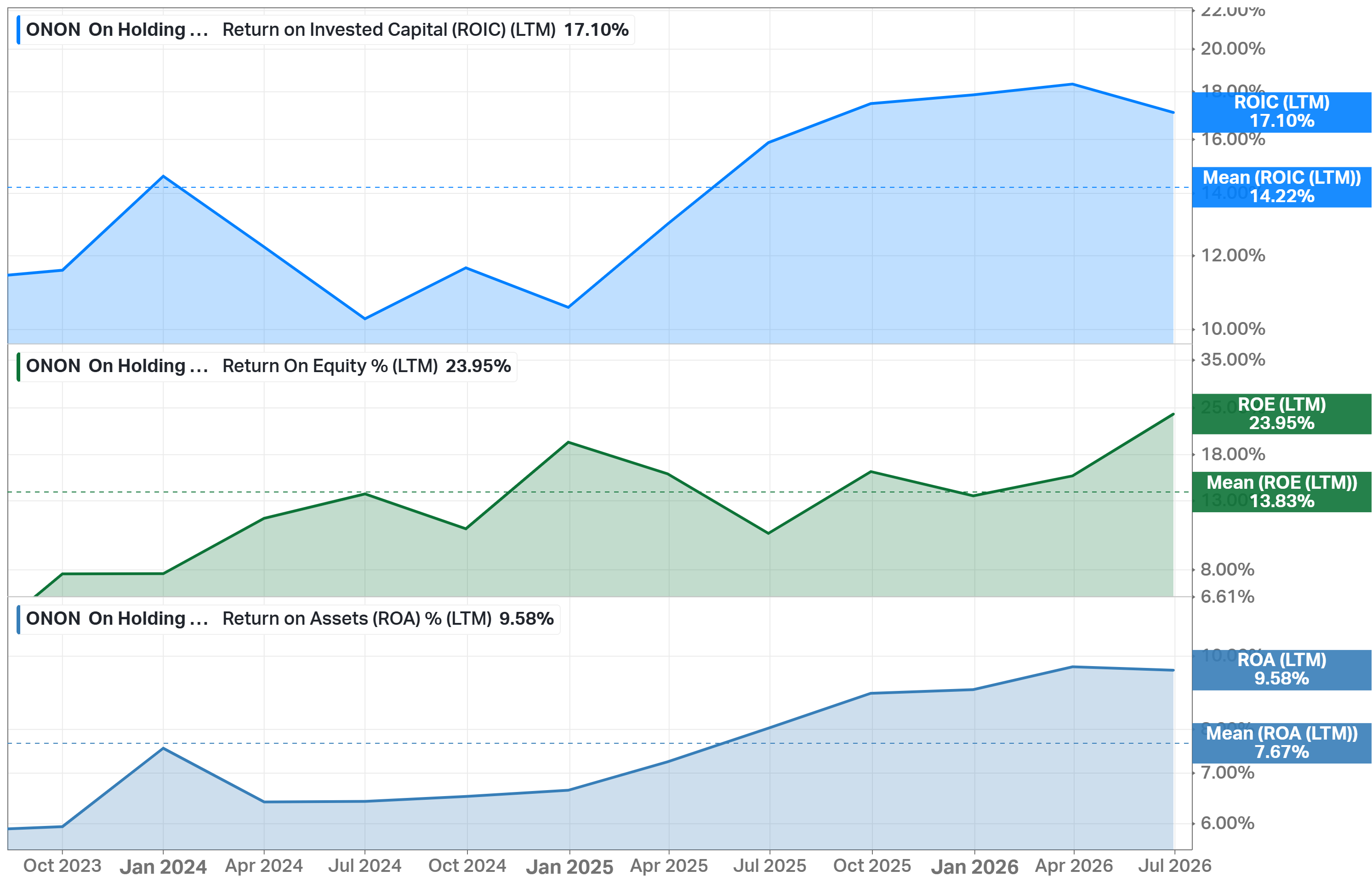
The returns on capital show the same trend: ROIC is 17.1% against a 14.2% 3Y mean, ROE is 24.0% against 13.8%, ROA is 9.6% against 7.7%. ROIC increased from ~11% to 17.1% in 3 years while the company was still building stores and warehouses. The 24% ROE comes with very little leverage (Debt/Equity is only 0.30). Every franc On reinvests creates value thanks to a cost of capital around 9-10%. To compare, Deckers (HOKA) is still ahead at 33.8% - that is the level On's returns can grow into as the store base matures.

Business Strategy
Here, I would like to define four choices that create the strategy. First, premium-only - On does not chase volume. Wholesale sell-in is deliberately managed, discounts are rare, and management repeats in every call that they only pursue growth that protects and promotes the brand. This quarter proved their statement - they accepted +4.8% in wholesale instead of pushing extra volume into the channel.
Second, DTC-first. Management describes its own stores as “highly profitable premium brand hubs”. Worth noting that the store network is still small by competitors’ standards - the Sao Paulo and Copenhagen openings were the first ones in those markets (15 years into the company’s life). Every point of DTC mix adds gross margin. At 45.7% of sales, there is still a long way to go.
Third, beyond running shoes. Apparel and accessories are the fastest-growing product lines. At the same time, tennis is becoming a real franchise: Federer’s THE ROGER line started it, and the current team keeps it visible on tour. Though these businesses are still small next to running shoes. Each new category is sold through stores and the app that the shoe business already paid for.
Fourth, the next generation of customers. I do not buy stocks for sustainability reports, but I pay attention when sustainability is a sales argument. Their stated goal is fossil-free materials with circular systems. The LightSpray emissions cut is a product feature; Cyclon is a subscription where the customer returns the shoe for recycling. Together with the Right to Run community program and a memorable mission (“ignite the human spirit through movement”), this is a brand that the youngest cohort of buyers picks for its responsibility. What I like: that cohort is already more than a third of On’s customers.
Capital Allocation
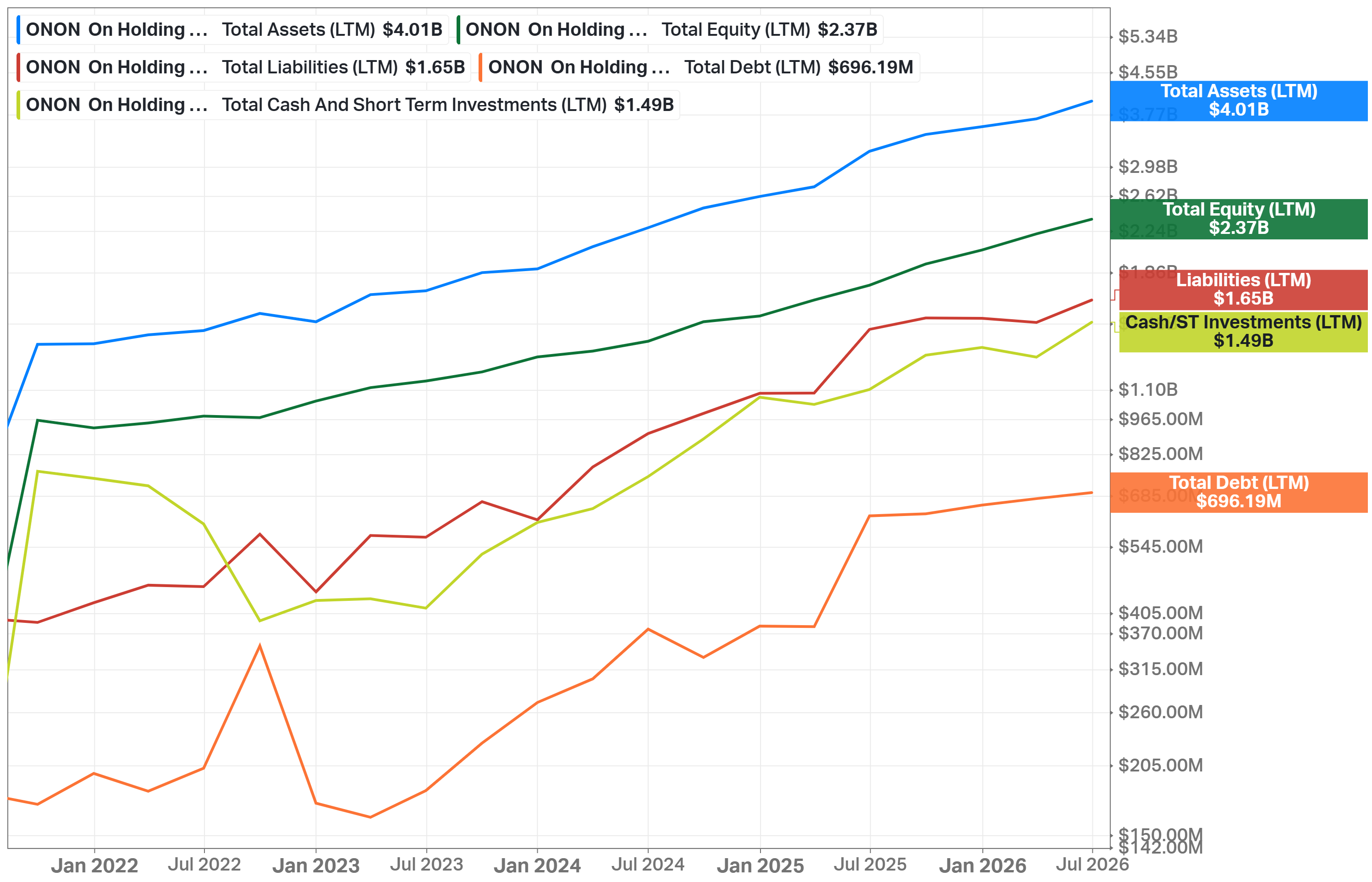
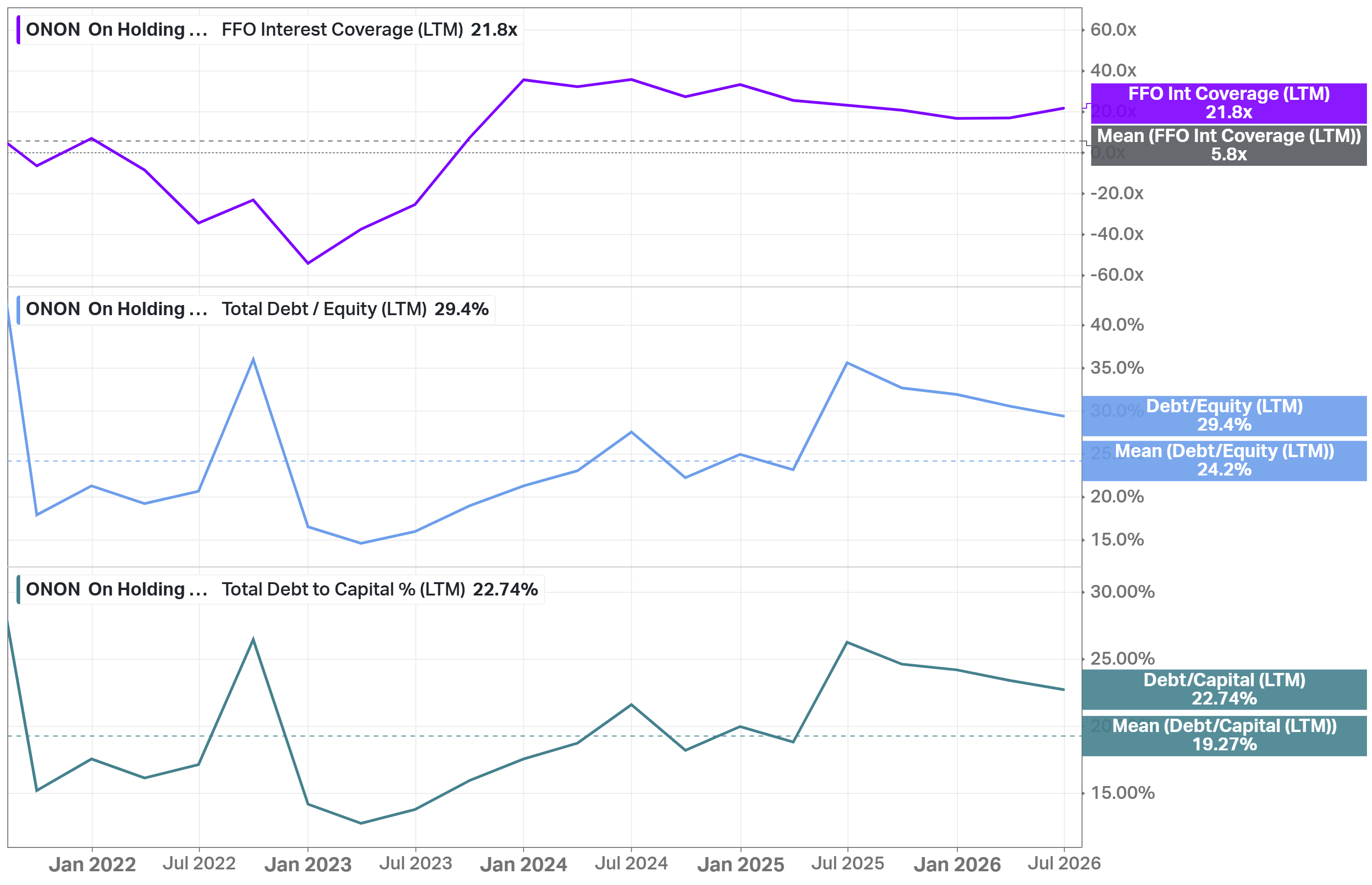
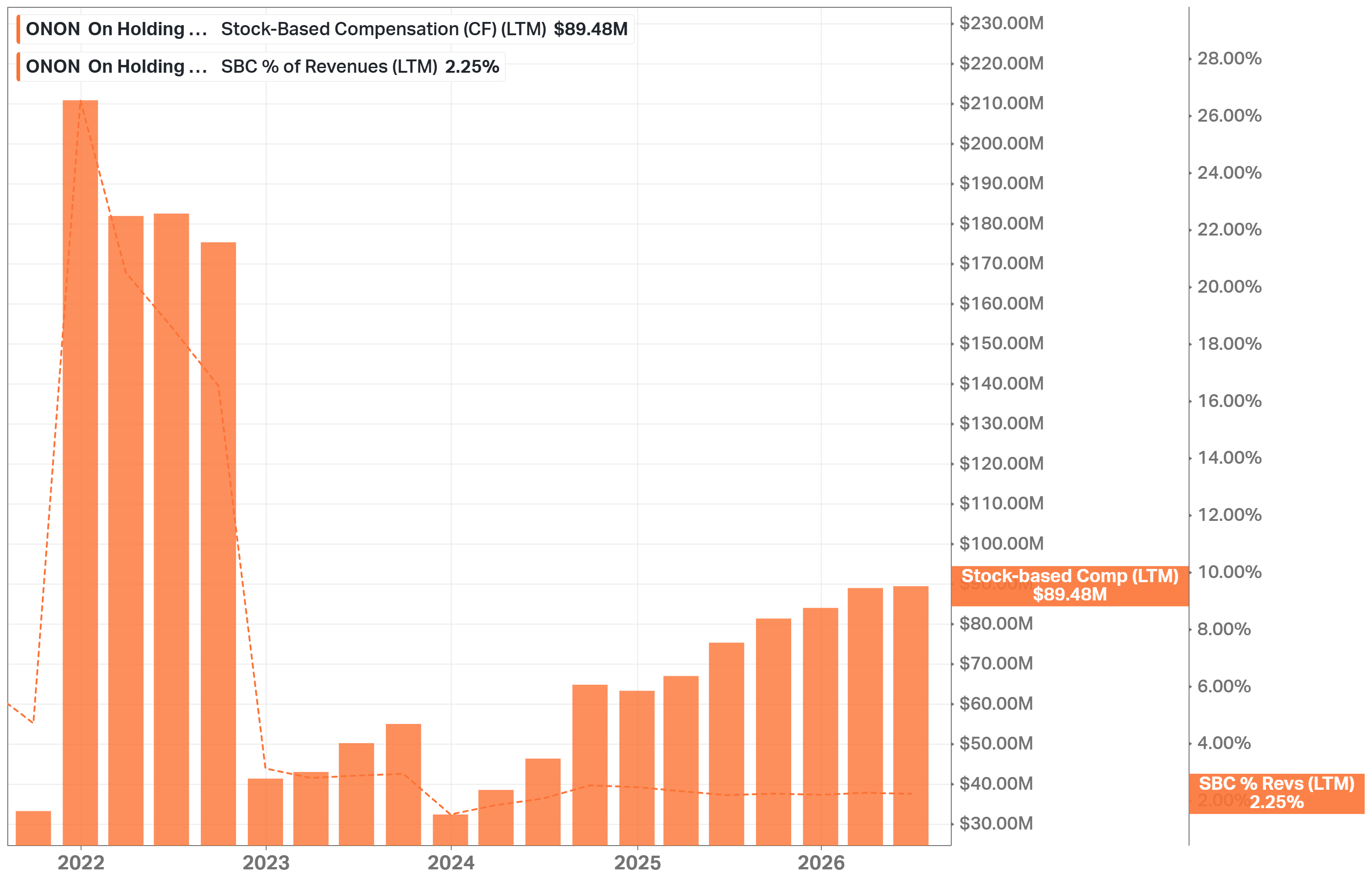
The balance sheet is simple and conservative. Cash and short-term investments of $1.49B against $696M of total debt - that means roughly $0.8B of net cash. Debt/Equity is only 0.30, and FFO interest coverage is 21.8x. There is no dividend and no buyback; the share count grows slightly (buyback yield is -0.12%). Worth noting that stock-based compensation is only 2.25% of revenue, down from over 20% in the IPO era. In my opinion, the dilution problem is solved.
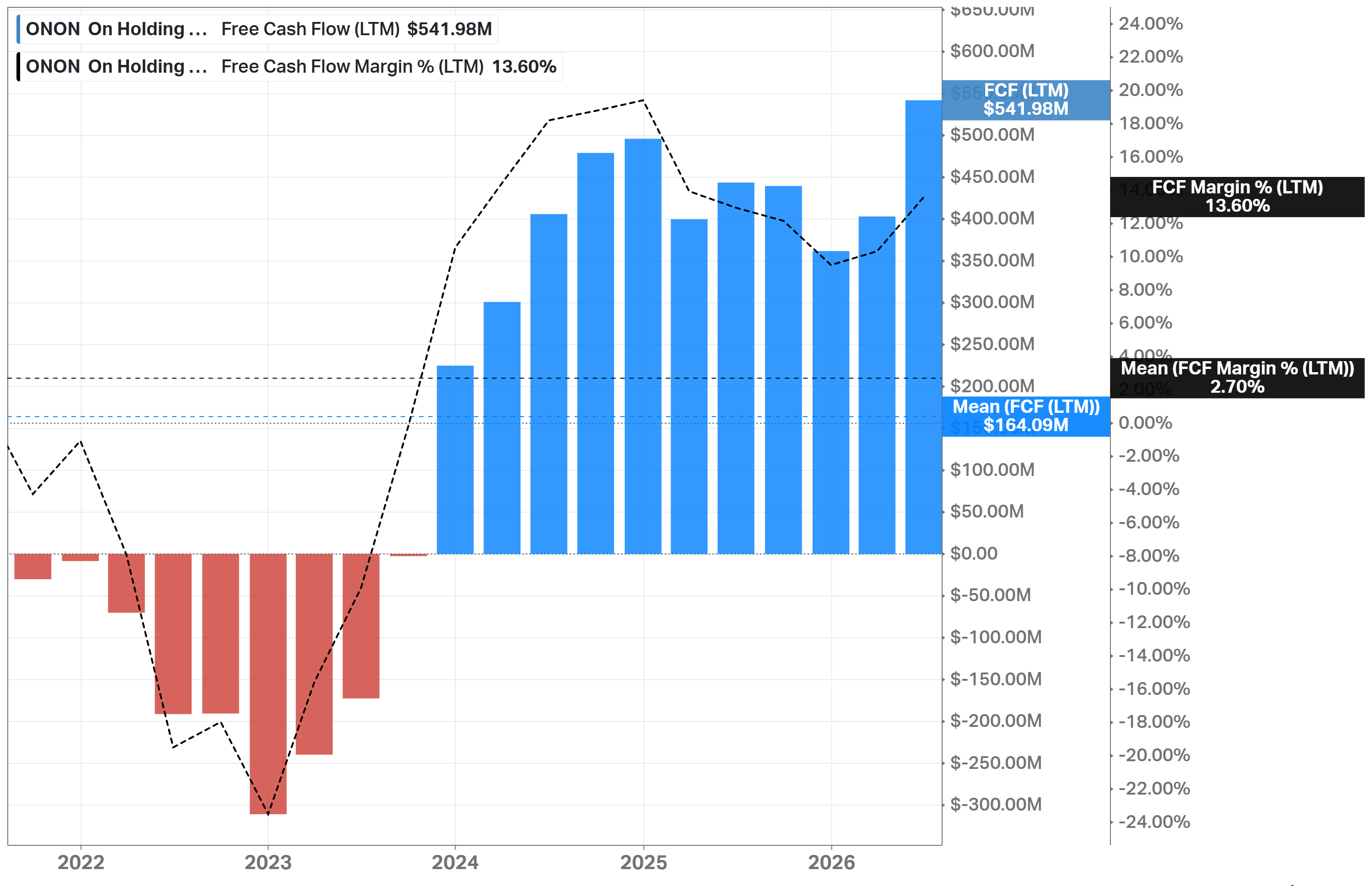
FCF of $542M funds the store network and inventory without new debt. The FCF history shows the maturation of the business: negative through 2022 - 2023 while the company built inventory and logistics; positive and growing from 2024.
Advantages
The best growth and margin combination among the competitors. Consensus expects ~25% EPS growth over the next 5 years, and the 65.4% gross margin is above every major sportswear competitor. Normally, an investor pays for one of those. Here both come in one stock.
Margin expansion has a built-in driver. DTC is 45.7% of sales and rising; every extra point of the mix adds gross margin. The store network is still small by competitors’ standards, so this driver has years left.
The balance sheet is safe. Net cash of ~$0.8B, FCF margin of 13.6%, interest coverage of 21.8x. Whatever the consumer does the next year, On is not a solvency risk.
The brand is still early. 90+ countries but only 30% global awareness; 50M+ pairs sold in the company’s history; apparel and accessories growing 50%+ constant currency from small bases. Most future customers have not met the brand yet.
The derating has already happened. From 200x+ at IPO to 17x forward, while net income margin increased from negative to 12.3% and ROIC increased to 17.1%.
Disadvantages
A consumer cyclical in a promotional market. Americas at +4.5% reported is the weaker part, since shoes are discretionary spending. A potential US recession would hit both volume and the wholesale channel.
Currency and tariffs. On reports in CHF, sells mostly in dollars, and absorbs US import tariffs. The strong franc removed about 8 points of reported growth this quarter and can keep doing it. This does not touch the business quality, but it does touch the headline numbers the market trades on.
Competition is a meaningful risk. HOKA is bigger in run specialty, Nike is recovering, and every brand now sells a thick-cushion shoe. The Cloudtilt is a fashion item, but fashion cycles end eventually.
Nothing supports the stock in a drawdown. No dividend, no buyback, slight dilution - when sentiment turns, there is no mechanical buyer. The 33% YTD fall during a year of 20%+ growth shows how this feels.
The stock is volatile. 1Y volatility of ~50, short interest of 6.4%, and a 22% intraday swing on earnings day. Position sizing is critical here.
What the bears get right: a 6.4% short interest is serious money betting that the slowdown is real. Their case is simple. The Americas grew only 4.5% reported in the most important shoes market; “wholesale discipline” is what every brand says when sell-in gets soft. Deckers (HOKA) already showed how this story can go: HOKA decelerated, the multiple fell to 12x and stayed there. If On’s constant currency growth slides to the mid-teens, my 17x Bear Case is not a floor but a ceiling. As I see it, the real risk is the growth, not the franc. Q2’s DTC +34.3% constant currency and the raised margin guidance tell me the brand is fine. Even then, the position must be sized for the chance that this view is wrong.
Competitors
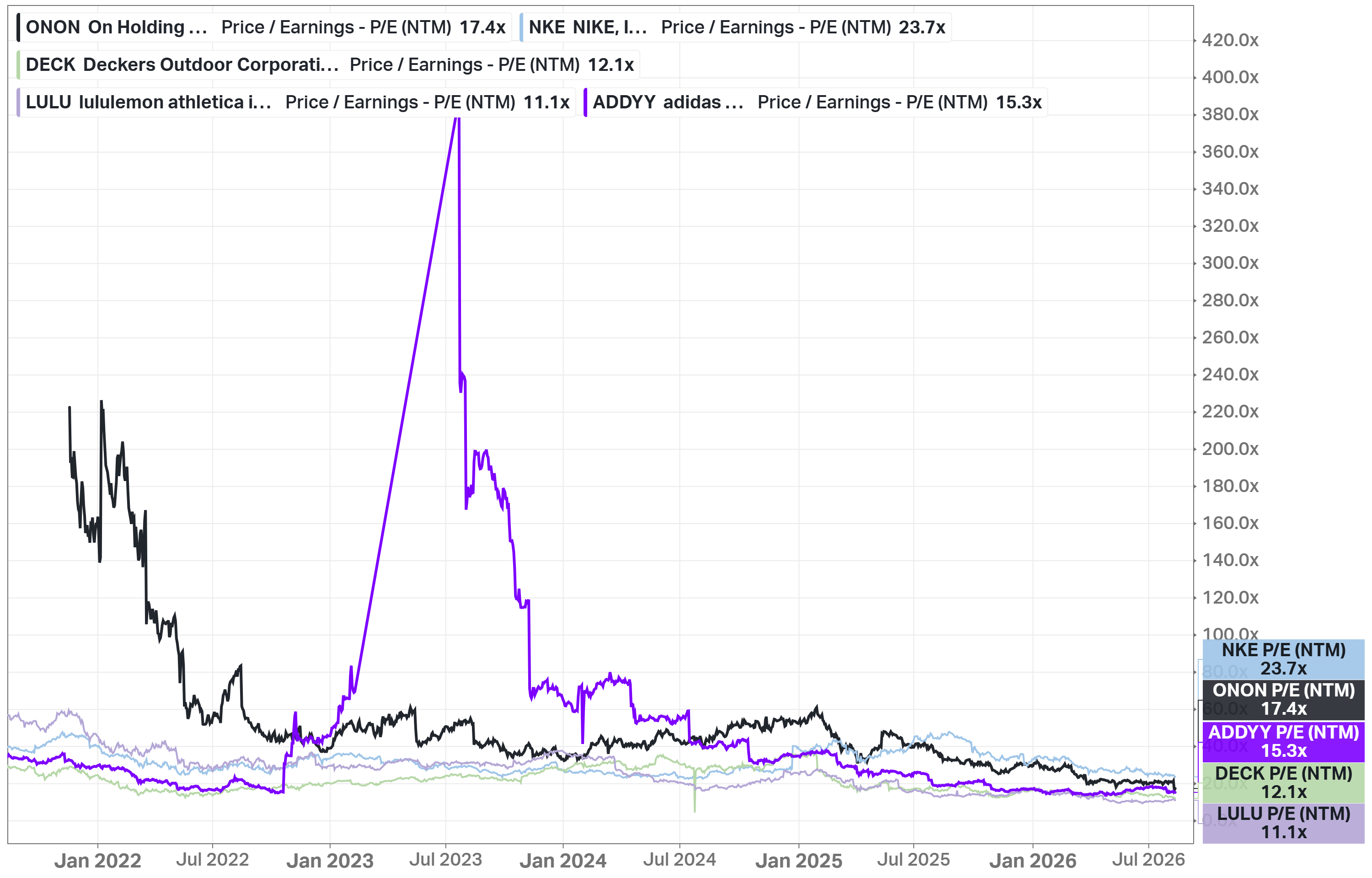
The competitors set here are: Nike (the giant), Deckers (HOKA, the closest rival), Lululemon (the premium athleisure benchmark), and Adidas. On forward P/E, ONON is at 17.3x and in the middle of the group; Nike is at 23.7x, Adidas at 15.3x, Deckers at 12.1x, and Lululemon at 11.1x.
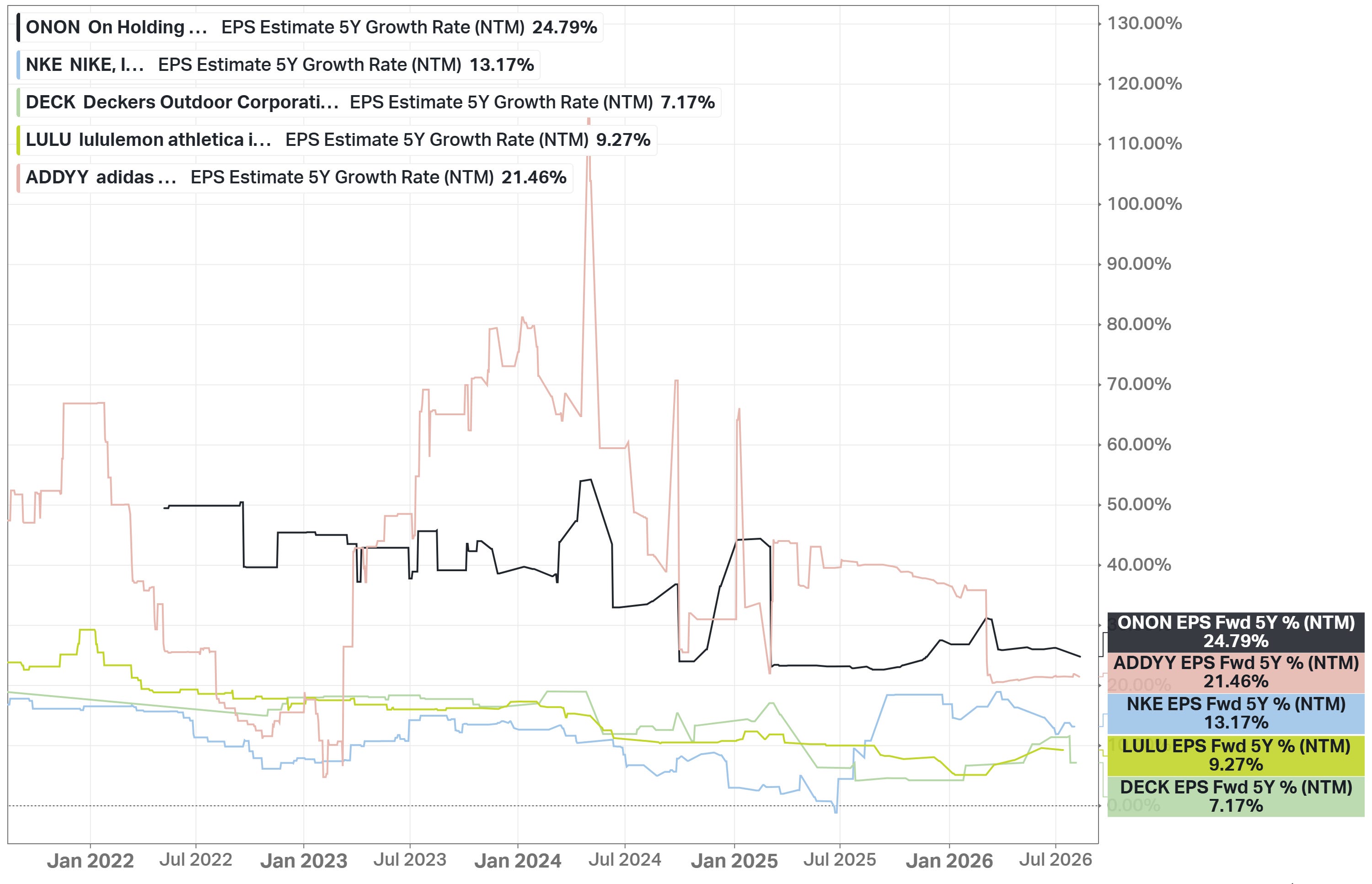
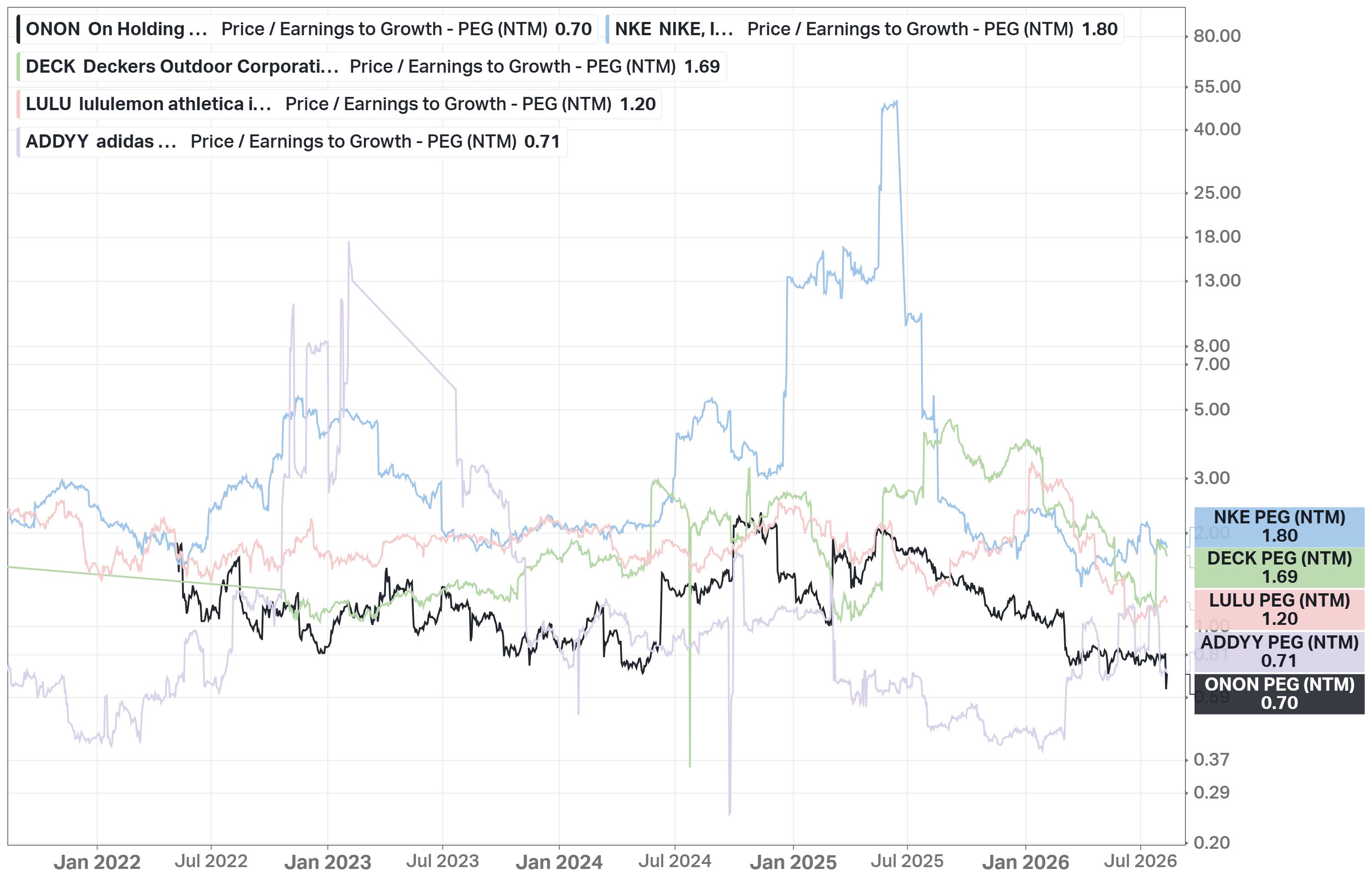
Consensus 5Y EPS growth: On 24.8%, Adidas 21.5%, Nike 13.2%, Lululemon 9.3%, Deckers 7.2%. As a result, On's PEG of 0.70 is the cheapest in the group. To compare, Nike trades at 1.80 per unit of growth and Deckers at 1.69. Deckers and Lululemon are cheap because their growth stalled. ONON is priced near them while growing 3x faster.
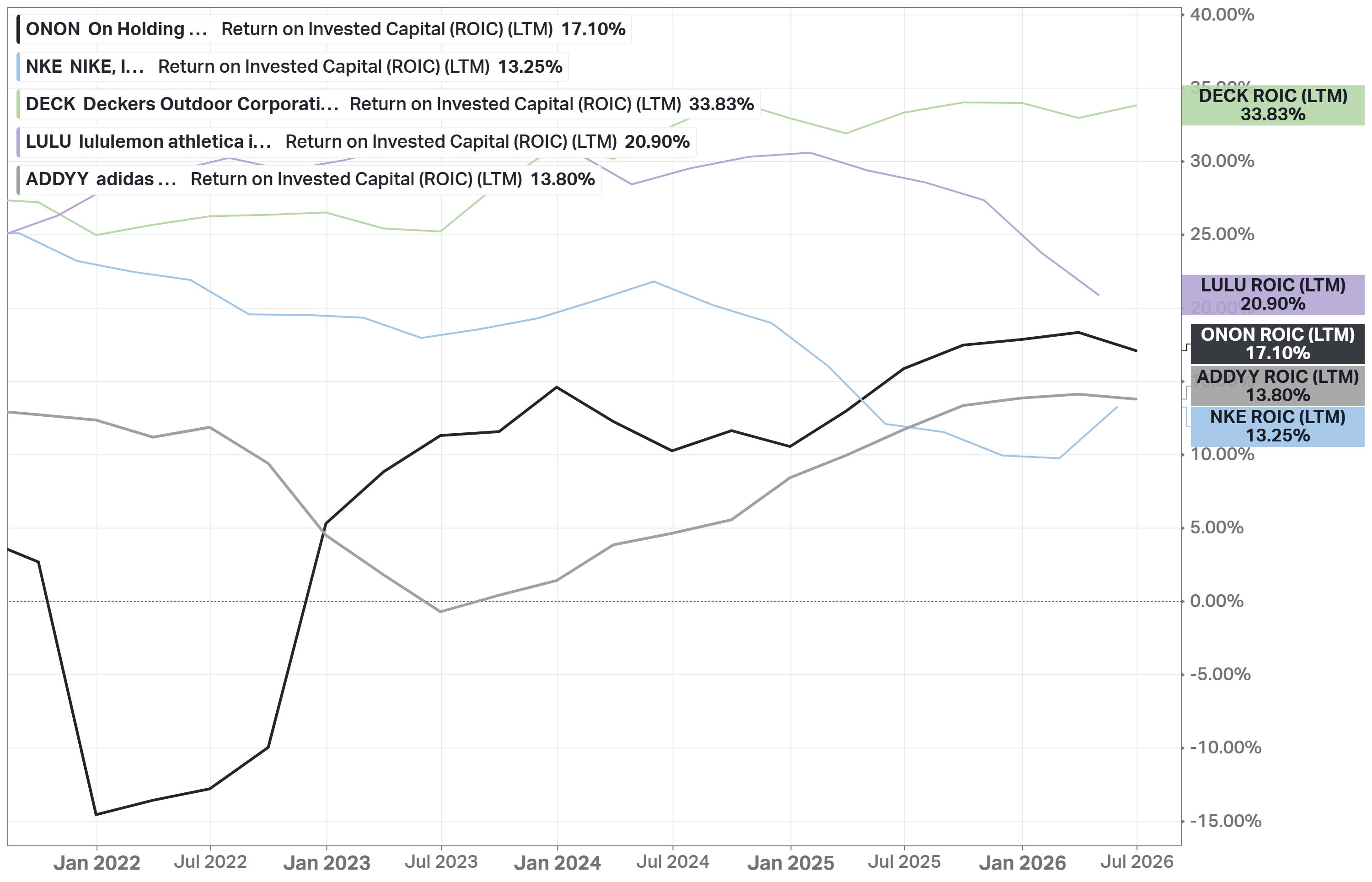
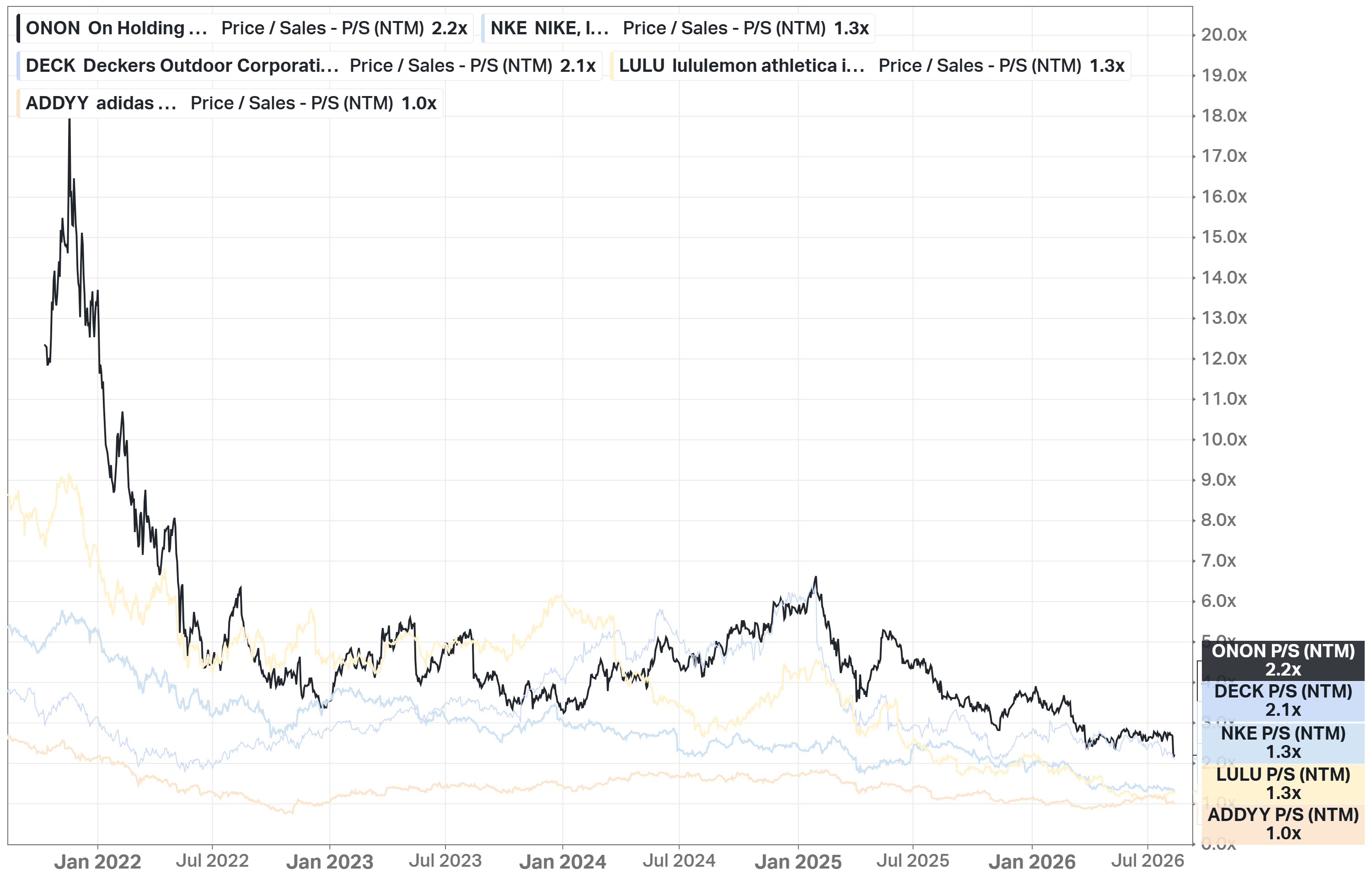
On returns on capital, Deckers leads with a 33.8% ROIC, Lululemon is at 20.9%, ONON is at 17.1% and rising, and Adidas and Nike are in the low teens. On Price/Sales, the whole group has compressed: ONON at 2.2x is nearly level with Deckers at 2.1x; Nike and Lululemon are at 1.3x. In my view, On is not the best business here yet (Deckers is), but it is the one improving fastest. And the only one that grows above 20% while priced like the slow ones.
Past
Q2 2026 (ended June 30, all CHF, YoY):
Net sales +13.5% to 850.3M (+21.6% constant currency); DTC +26.0% to 388.4M (+34.3% cc)
By region: EMEA +15.4%, Americas +4.5%, Asia-Pacific +43.1% (cc: +20.5% / +13.0% / +54.7%)
Apparel +47.7%, accessories +88.3% - the beyond-shoes business is compounding
Gross margin 65.4%, up 3.9 points, with US tariffs absorbed and zero refunds booked
Net income 105.0M against a 40.9M loss a year ago; adjusted EBITDA margin 19.8%
Cash increased by 18% to 1,205.6M
Why did the stock fall 14% on these numbers? I see five reasons, in order of importance:
The FX effect. Net sales grew 13.5% as reported but 21.6% in constant currency. The Swiss franc got stronger, and roughly 8 points of growth disappeared in translations.
The sales miss. Consensus expected more than CHF 850.3 million, and did not get it.
Americas looked weak. +4.5% was reported in the biggest region. In constant currency, it was +13.0%. Still the slowest region, but far from the near-zero the reported number suggests.
Weak wholesale. The channel grew only 4.8%. The company states it was deliberate: full-price discipline in a heavily promotional market and a clean runway for the new product cycle. The market read it as demand weakness.
Guidance. Full-year constant currency growth “in the low-20% range” after +24% in H1 implies some deceleration in H2, even if part of it is the wholesale choice above.
Worth noting also what the sellers skipped: On raised its full-year gross margin guidance to at least 65% and kept the adjusted EBITDA margin at 19.5 - 20%. A brand that is losing demand does not raise its margin guidance while absorbing US tariffs at full price. In my view, this combination of a slower reported top line and stronger profitability is a currency and channel story, not a brand story.
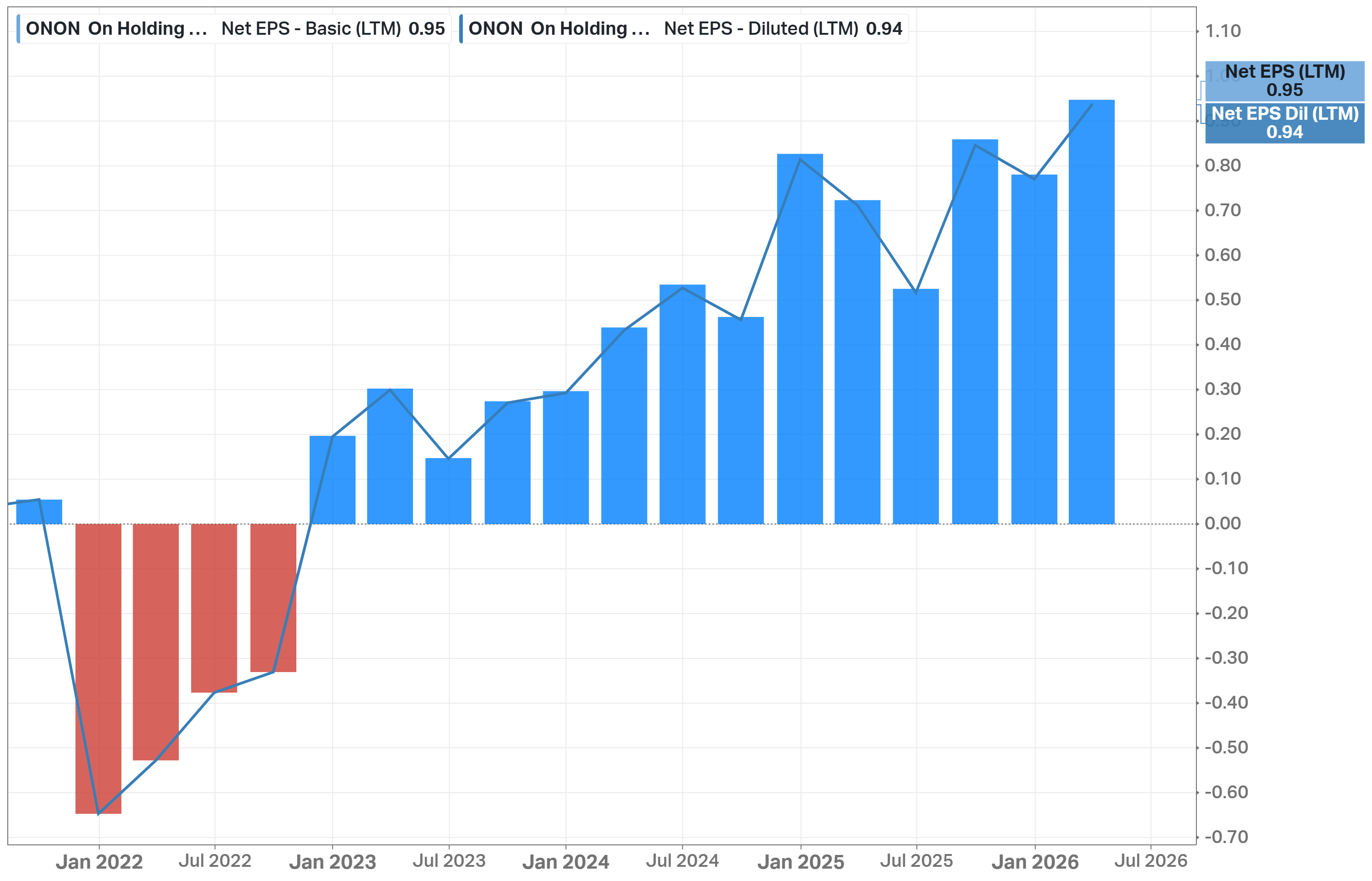
The longer history matters more. In 2022, the company lost money and burned cash: LTM EPS bottomed at -$0.65, and FCF was negative for 2 years. Since then, LTM revenue reached $3.99B, net income $490M, and FCF $542M. Every margin is above its 5Y mean. Net income margin increased from a 2% average to 12.3% today.
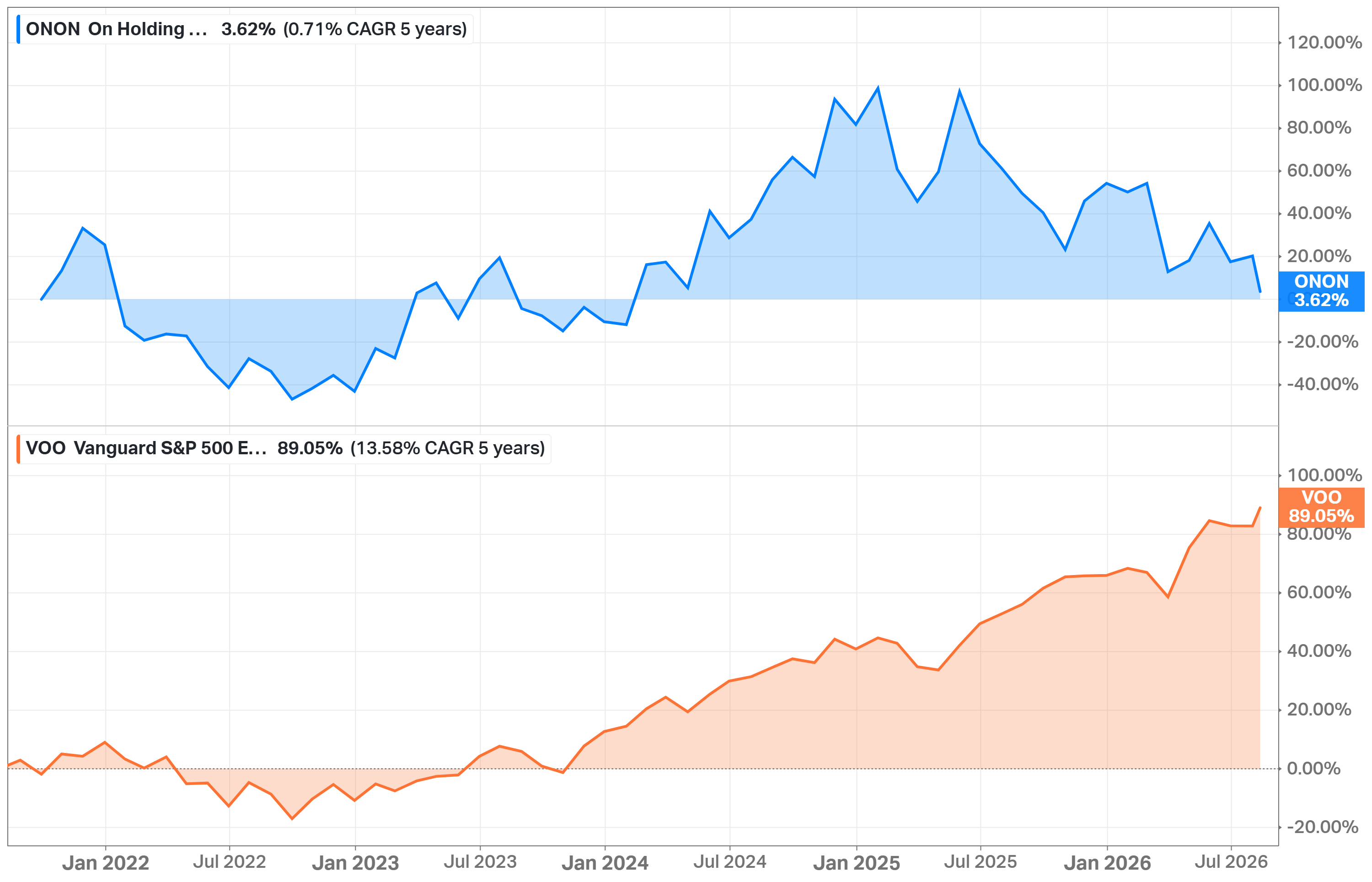
And the stock? Total return of 3.62% over 5 years (0.71% per year) against 89.05% for the S&P 500. And this despite the fact that the business roughly tripled over the same period. That is what makes the valuation interesting.
Future
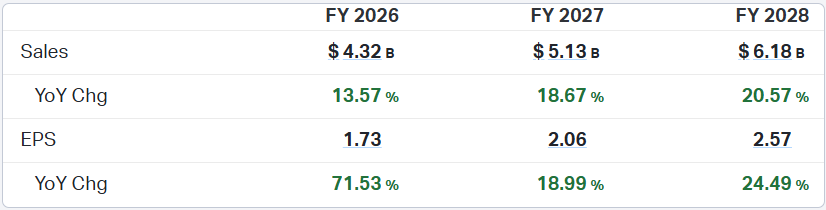
Consensus revenue: FY2026 $4.32B (+13.57%), FY2027 $5.13B (+18.67%), FY2028 $6.18B (+20.57%) - note the reacceleration as FX normalizes
Consensus EPS: $1.73 -> $2.06 -> $2.57 (FY2026 - FY2028)
5Y forward EPS growth estimate: 24.79%, versus a 40.18% mean since IPO - the street already cut its expectations nearly in half
Analysts: Strong Buy (7 Strong Buy / 16 Buy / 4 Hold / 1 Sell, 28 covering), average target $46.15, +48% from here (the range is $19.98 to $72.91)
Company guidance: FY2026 constant currency sales growth in the low-20% range, gross margin at least 65.0%, adjusted EBITDA margin 19.5 - 20.0%
Current Valuation
Current vs 5Y mean:
Price/Fwd Earnings: 17.3x vs 53.0x
Price/Fwd Sales: 2.2x vs 5.0x
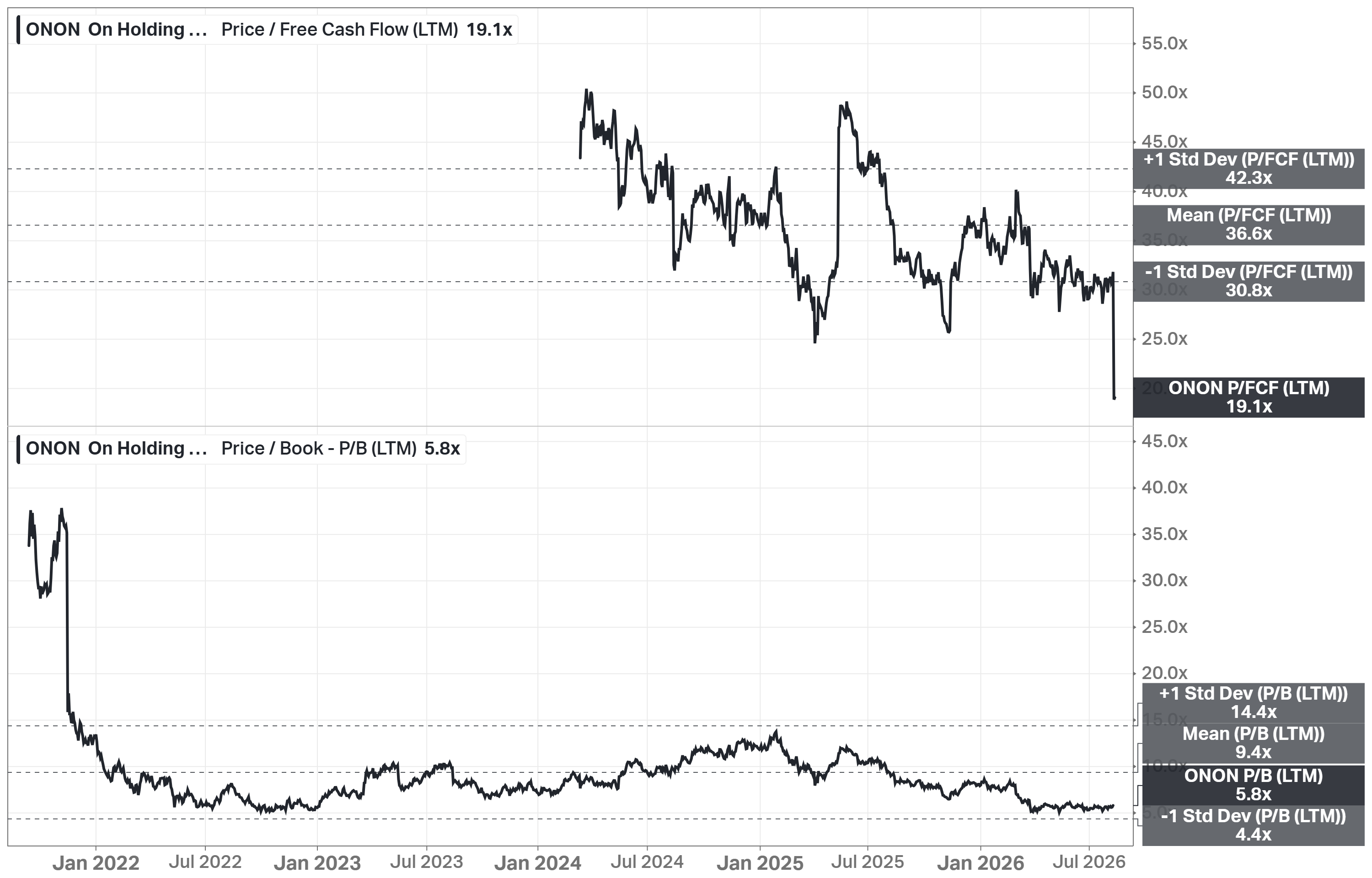
Price/FCF: 19.1x vs 36.6x
Price/Book: 5.8x vs 9.4x
PEG: 0.70 vs 1.20
Forward Earnings Yield: 5.7%
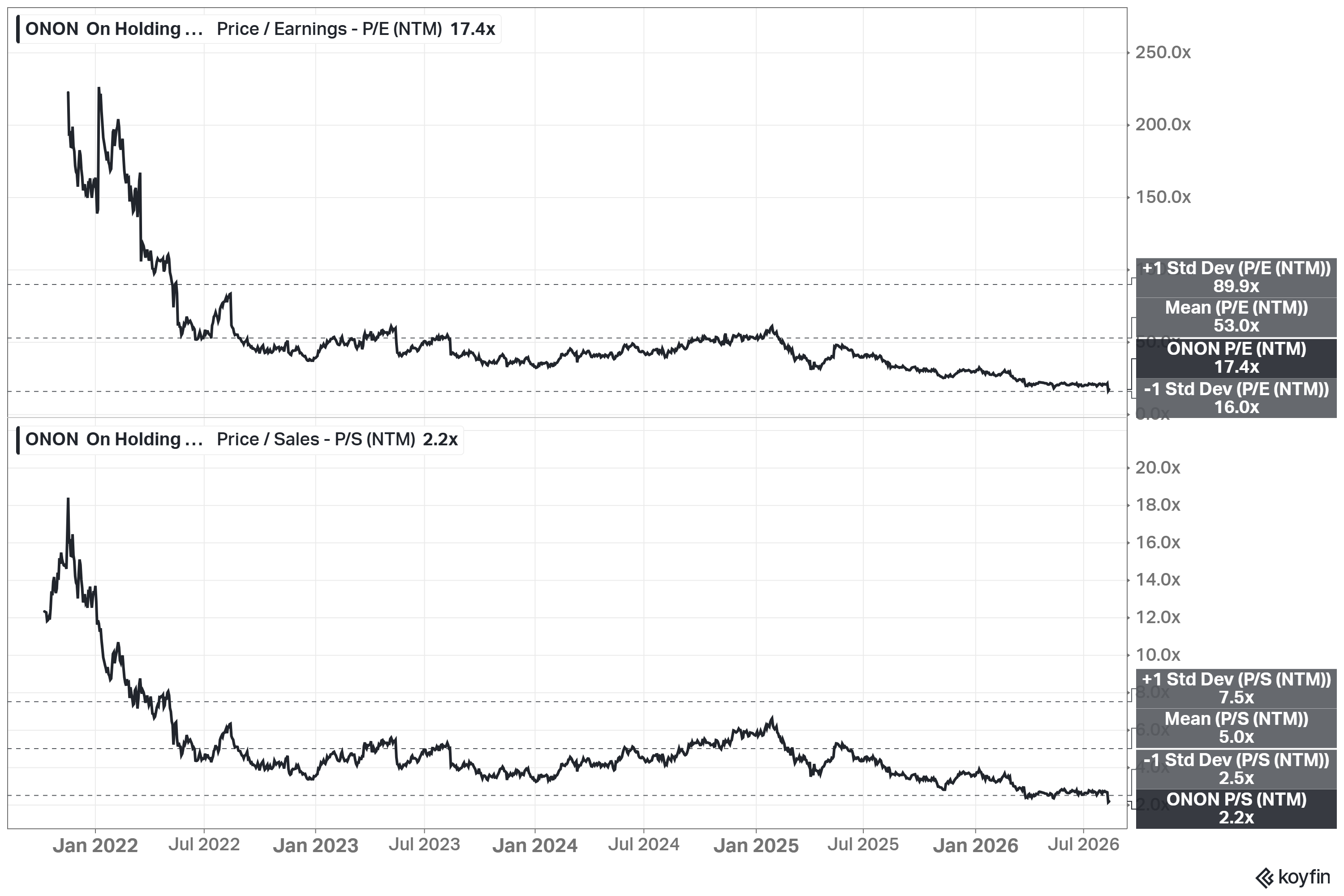
Every multiple is below its mean since IPO. The forward P/E touched its -1 standard deviation band (16.0x) recently. ONON now trades at a 5.7% forward earnings yield. To me, that is a value-stock yield for a business with ~25% expected EPS growth.
Analyst’s note:
The averages here cover the period since the September 2021 IPO. In the zero-rate era of 2021 - 2022 the stock traded at 150 - 220x forward earnings, which inflates the 53x mean. I do not use that mean anywhere in my model. The exit multiples below start from today’s 17x, not from the IPO-era levels.
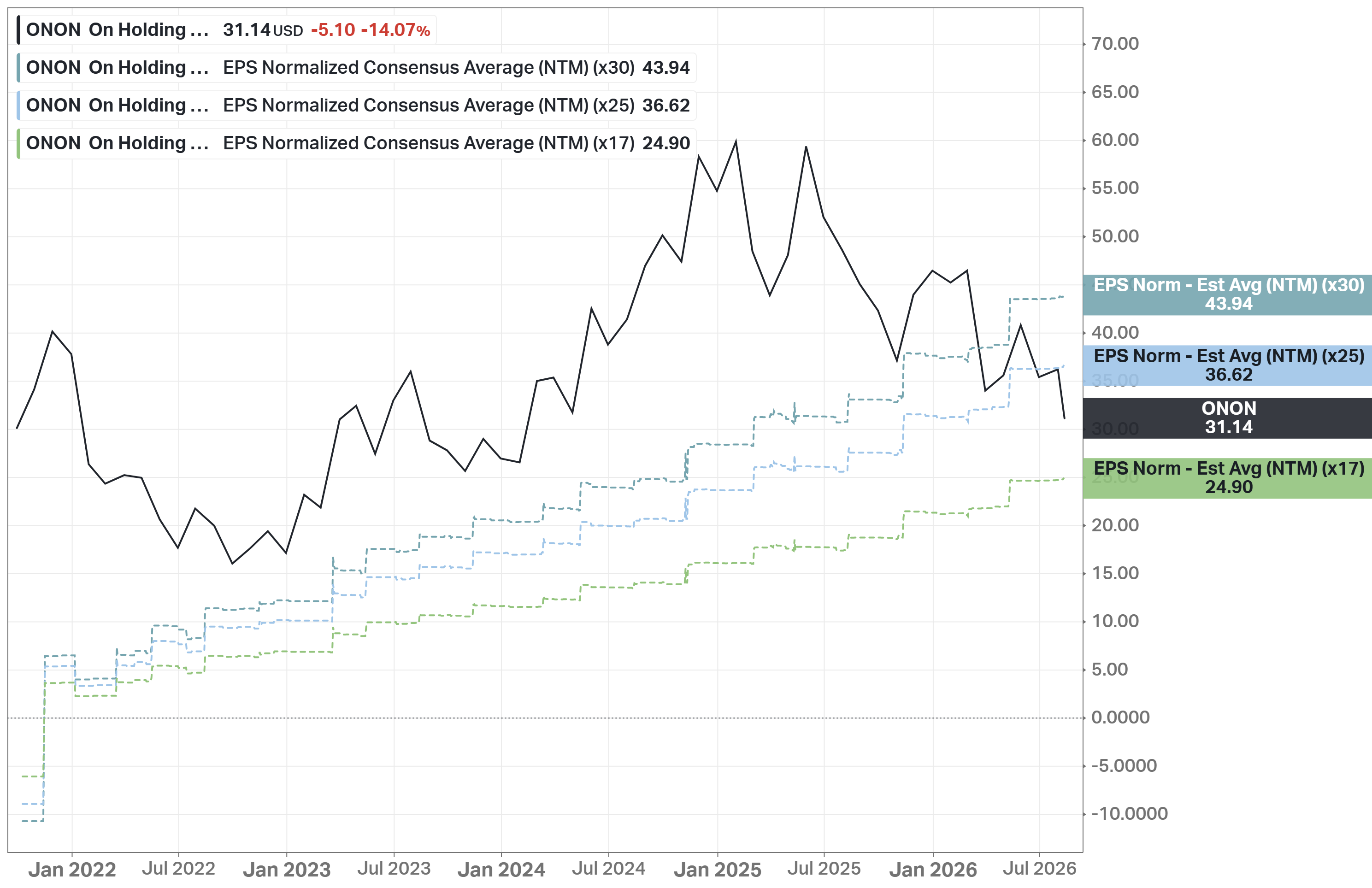
One chart frames this whole section. The corridor below takes the consensus forward EPS estimate and multiplies it by my three exit multiples: 17x, 25x, and 30x.
Fair Price
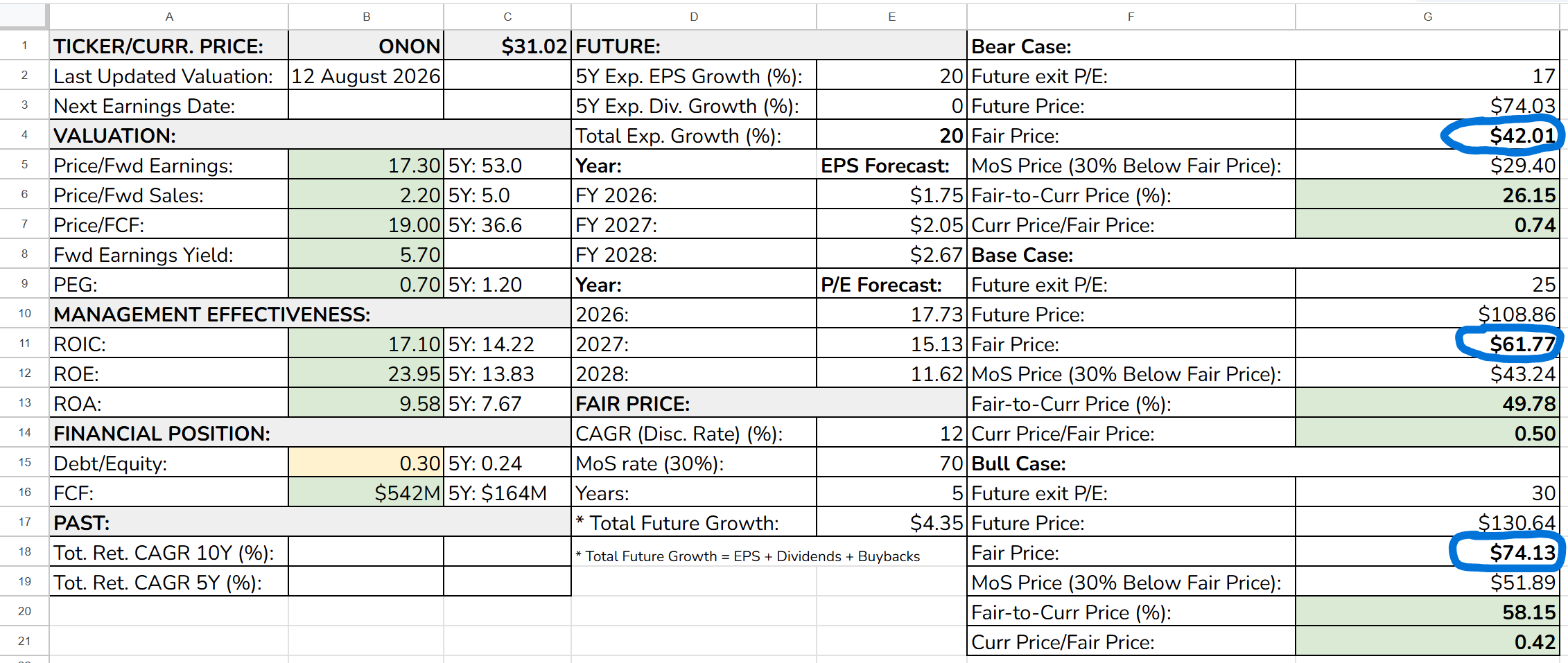
My standard model projects EPS 5 years forward and takes the slowdown risk into account by capping future growth at 20% per year. The cap is a rule - I never model above it. Consensus for the next 2 years is +19% and then +25%, and the 5Y consensus is ~25% per year, so the cap binds, and my path is below the consensus average. There are no dividends to add. Starting EPS is $1.75 (FY2026), which gives $4.35 in FY2031.
Analyst’s note:
Worth noting that consensus moved to $1.73, when I had already built the model. The 1% difference is far inside the 30% margin of safety, so I keep the model as it is.
The discount rate is 12%; the margin of safety is 30%. The exit multiples are 17x, 25x, and 30x. 17x assumes the market keeps pricing ONON exactly like today for 5 more years, despite 20% growth. 25x is a normal multiple for premium growth (a PEG of 1.25). 30x is a multiple for a brand with recovered momentum - still far below the IPO-era levels. The 53x historical mean plays no role, for the reason in my Analyst’s note in the section above.
Bear Case (exit P/E 17x): fair price $42 - MoS price $29
Base Case (exit P/E 25x): fair price $62 - MoS price $43
Bull Case (exit P/E 30x): fair price $74 - MoS price $52
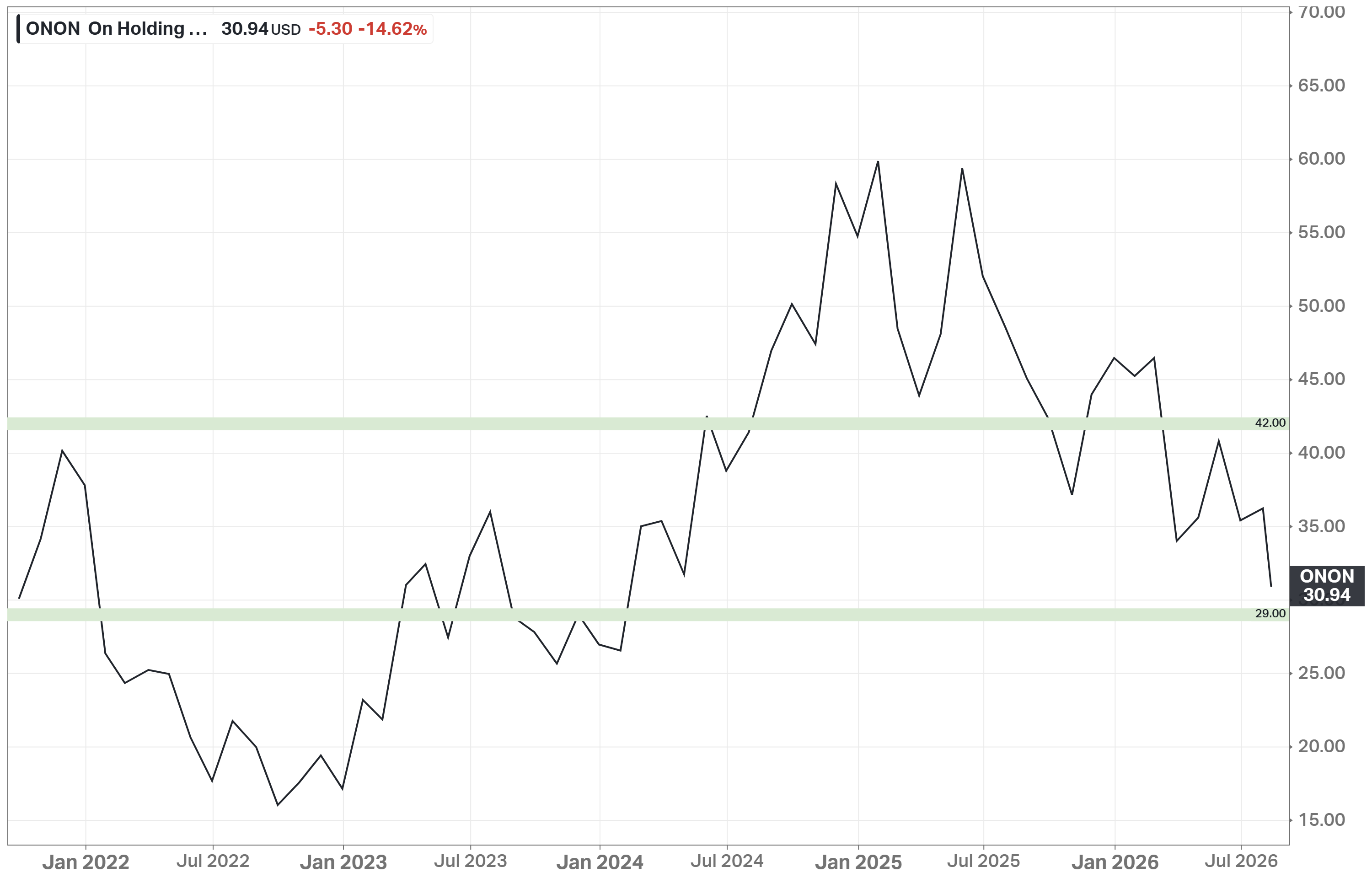
At $31, the stock trades 26% below the Bear Case fair price. Not below the Base Case - below the Bear Case, the scenario where the multiple never recovers at all. Worth noting that the Bull Case is within a dollar of the highest street target of $73, so the corridor is not built on my private optimism.
Analyst’s note:
For transparency about the timing: I bought at ~$38 in early August, before the report. The model said the zone starts at $42, and I paid inside it. Two weeks later, the market set the price 18% lower. This is why the margin of safety exists - it does not protect from a drawdown, it decides whether the drawdown is a problem or an opportunity.
Verdict: ONON belongs in a long-term portfolio as a premium-brand growth position. Not a core holding, and sized like a volatile mid-cap consumer cyclical. The company is the strongest growth story in sportswear: the best gross margin in the industry (65.4%), 20%+ constant currency growth, ~$0.8B of net cash, and rising returns on capital. The stock trades at 17x forward earnings with a PEG of 0.70, priced next to competitors that grow 3x slower. My model takes the risks into account by capping future growth at 20% and still produces a fair price corridor of $42 - 74. At $31, the stock is 26% below even the Bear Case, deep inside the accumulation zone of $29 - 42. I own the stock from ~$38, as documented in the July portfolio update. In my view, the realistic bear case is not a crash but dead money - constant currency growth slides to the mid-teens, and the stock moves sideways with 20% swings on every report. Buy with a multi-year horizon, and judge the thesis on constant currency growth and gross margin, not the share price.
Due Diligence
Profitability (11 of 15):
Positive Gross Profit: $2.58B
Positive Operating Income: $549M
Positive Net Income: $490M
Positive FCF: $542M
Gross margin >= 40%: Yes (64.8%)
Net margin >= 10%: Yes (12.3%)
FCF margin >= 10%: Yes (13.6%)
Management (ROIC, ROE, ROA) >= 10%: Mostly (17.1% / 24.0% / 9.6%)
Strong 3Y Revenue Growth: ~30% per year
Exceptional Revenue Growth Forecast: ~19% per year over the next 3 years
ROE is increasing: ~8% -> 24%
ROIC is increasing: ~11% -> 17%
Revenue surprises in the last 5Y in a row: No (2023 missed)
EPS surprises in the last 5Y in a row: No (2021 and 2023 missed)
EPS growth YoY 5Y in a row: No (Decline in 2025)
Financial Strength (6 of 6):
Total assets ($4.01B) exceed total liabilities ($1.65B) by 2.4x
Negative Net Debt: -$0.79B (cash and short-term investments of $1.49B against $696M of debt)
Low Debt/Equity: 0.30 (5Y mean: 0.24)
Debt/Capital: 0.23 (5Y mean: 0.19)
Interest coverage (FFO): 21.8x
Piotroski F-Score: 8 of 9
Valuation and Advantage (2 of 4):
Valuation < 5Y mean: Yes
Valuation < the industry: Mixed
Does it have a moat: Yes (narrow)
Outperformed the S&P 500 over 5Y: No (0.71% vs 13.58% CAGR)
Shares (2 of 3):
Insider ownership >= 5%: Yes (founder-led, ~31%)
Fewer shares outstanding YoY: No (slight dilution)
Insider buys in the last 6M: Yes (May)
Price (3 of 4):
1Y price forecast > 10%: +48%
Next 5Y EPS growth estimate (CAGR) > 10%: Yes (~24.8%)
DCF Value: ~$74.75; undervalued by ~58%
Short Interest < 5%: No (6.4%)
Watchlist Note
Premium Swiss sportswear compounder. +21.6% cc sales growth, 65.4% GM (best in sportswear), net cash ~$0.8B, FCF margin 13.6%. 17x fwd P/E vs 53x avg since IPO, PEG 0.70 - cheapest growth in the competitors group. Fell 33% YTD on FX translation and a deliberate wholesale decision, not brand weakness. Fair price corridor $42 - 74; accumulation zone $29 - 42. Risks: US consumer, CHF translation, HOKA/Nike competition, 6.4% short interest.
One-Pager
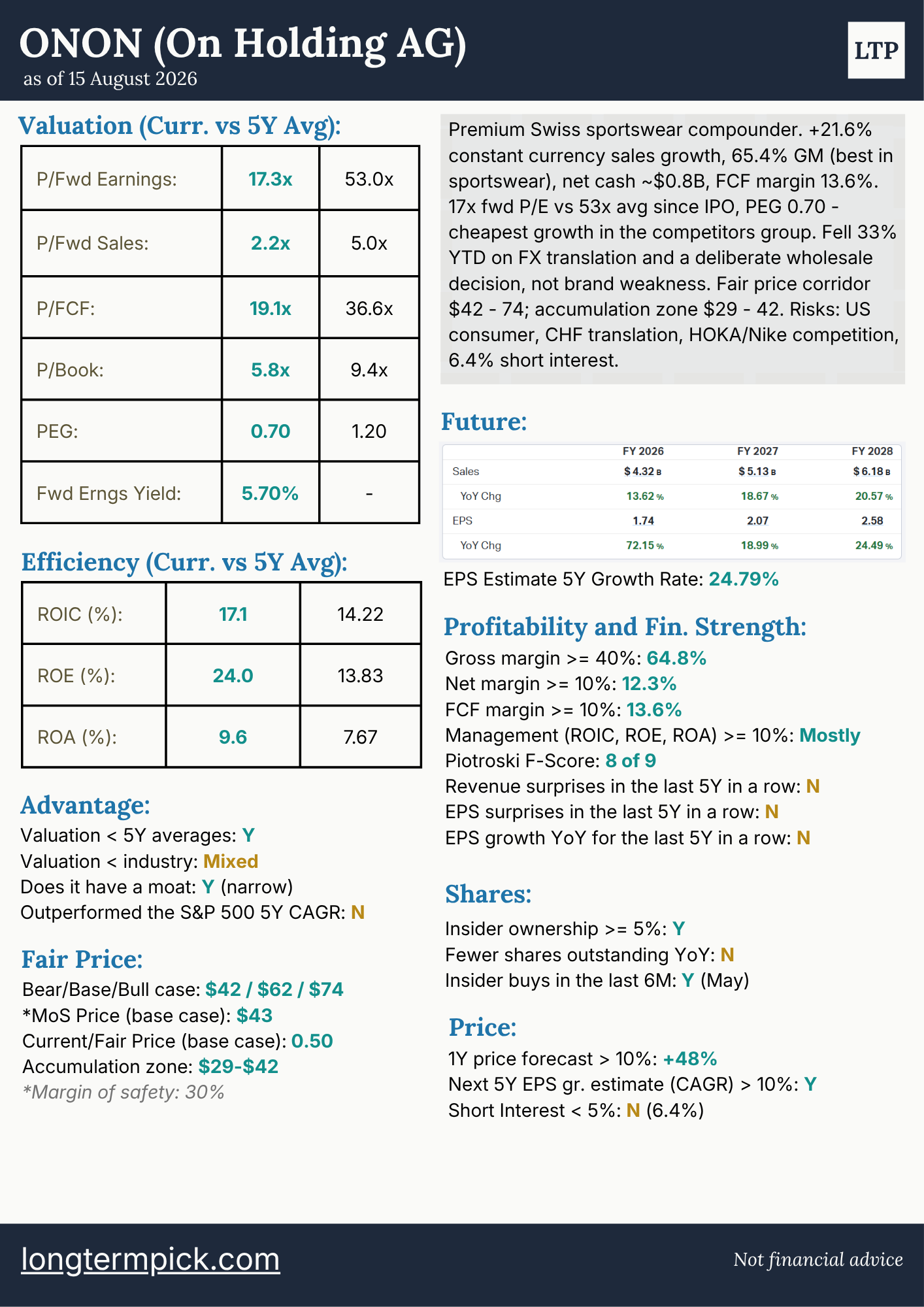
This is not a financial or investing recommendation. It is solely for educational purposes.
Thank you for this article, i have been meaning to search for a consumer-discretionary company with growth potential. It seems accumulating at these prices would provide a great Margin of Safety