

Content:
• Anthropic Raises Growth Expectations
• AI Use at Work Keeps Rising
• Meta’s AI Starts to Show Returns
• Microsoft’s Cloud Backlog Keeps Growing
• Growing Global Copper Demand
• Data Centers Drive Copper Demand
• Central Banks Shift Toward Gold
• US Sentiment Signals Slower Growth
• 2026 Growth Outlook
• Central Bank Balance Sheets
Anthropic Raises Growth Expectations
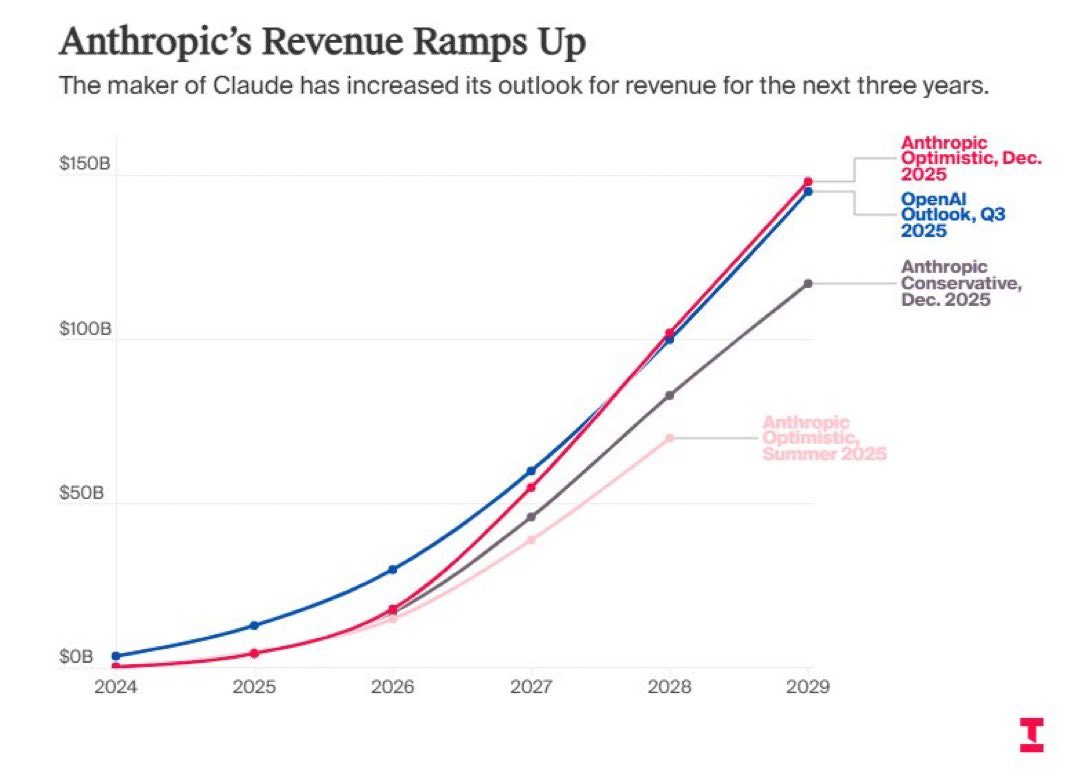
Anthropic has raised its revenue outlook for the next few years. Updated internal scenarios show higher revenue paths than earlier estimates, especially in the optimistic case.
Even the more conservative case points to very strong growth, while the optimistic case reflects faster adoption and higher pricing for advanced AI models. This confirms that demand for large-scale AI systems is growing faster than previously expected.
The key takeaway is indirect exposure. Amazon owns around 20% of Anthropic and is its main cloud partner through AWS, meaning Anthropic’s growth could drive higher demand for AWS compute and services.
AMZN Current Valuation vs 5-Year Mean:
Price/Forward Earnings: 32.1x / 53.7x
Price/Forward Sales: 3.3x / 2.8x
PEG: 1.77 / 2.51
Stocks & ETFs to watch:
AMZN – Amazon (Anthropic equity stake and AWS infrastructure)
MSFT – Microsoft (OpenAI partnership and Azure AI)
GOOGL – Alphabet (Gemini and internal AI models)
NVDA – NVIDIA (AI training and inference hardware)
SMH – VanEck Semiconductor ETF (broad AI hardware exposure)
Previous Notes:

AI Use at Work Keeps Rising
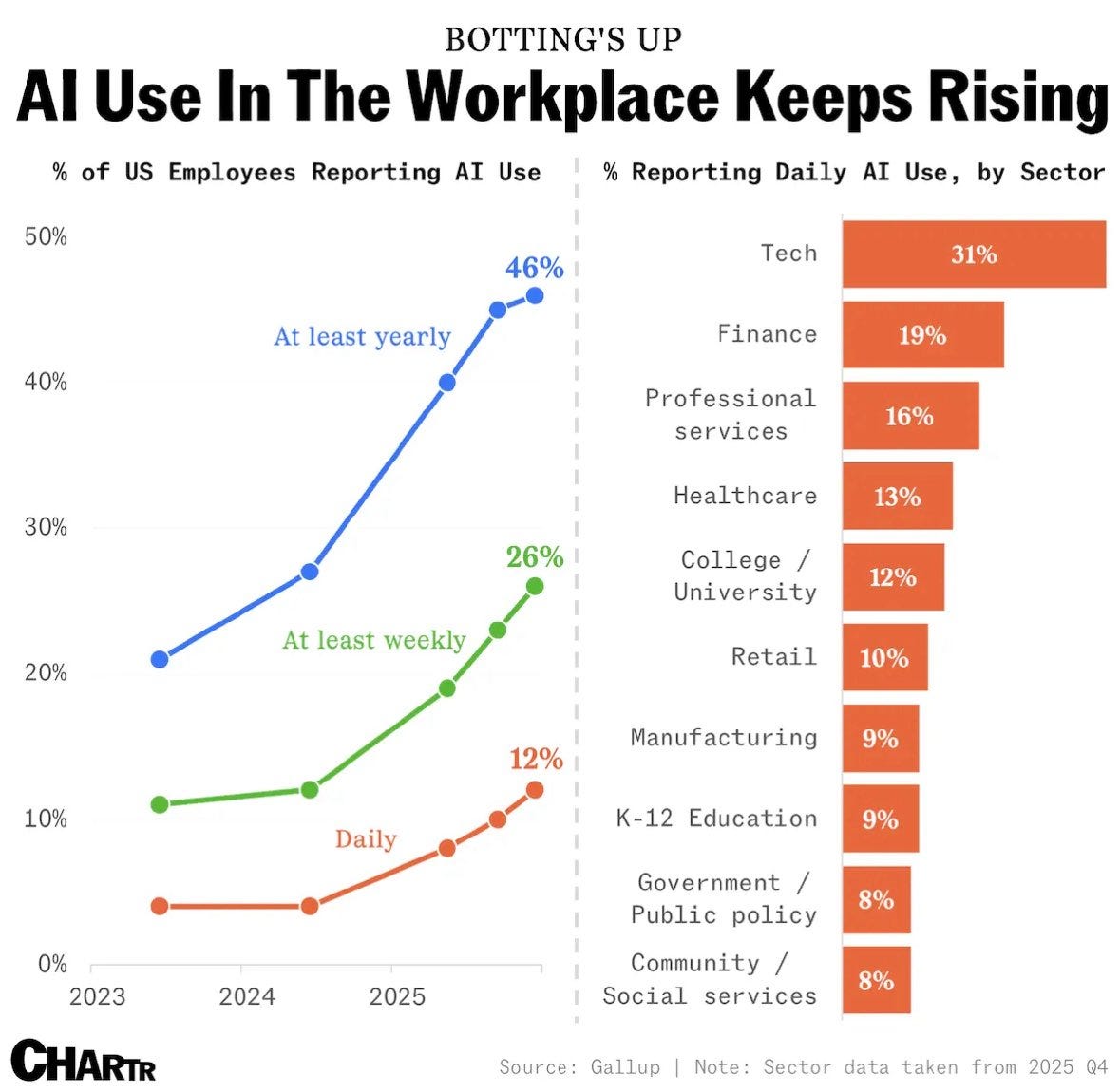
AI is becoming part of everyday work. Around 46% of US employees now use AI at least once a year, 26% use it weekly, and 12% use it daily. Daily usage has increased sharply since 2023, showing that AI is moving from testing to regular use.
Adoption is highest in technology, followed by finance and professional services, but usage is spreading across many industries. Employees mainly use AI tools to write text, analyze data, code, and improve productivity.
This trend supports long-term demand for AI software, cloud infrastructure, and enterprise tools that are built directly into daily workflows.
Stocks & ETFs to watch:
MSFT – Microsoft (Copilot and enterprise AI tools)
GOOGL – Alphabet (Gemini and Workspace AI)
AMZN – Amazon (AWS AI infrastructure)
META – Meta Platforms (AI tools for businesses)
IGV – iShares Expanded Tech-Software ETF (software and AI exposure)
Meta’s AI Starts to Show Returns
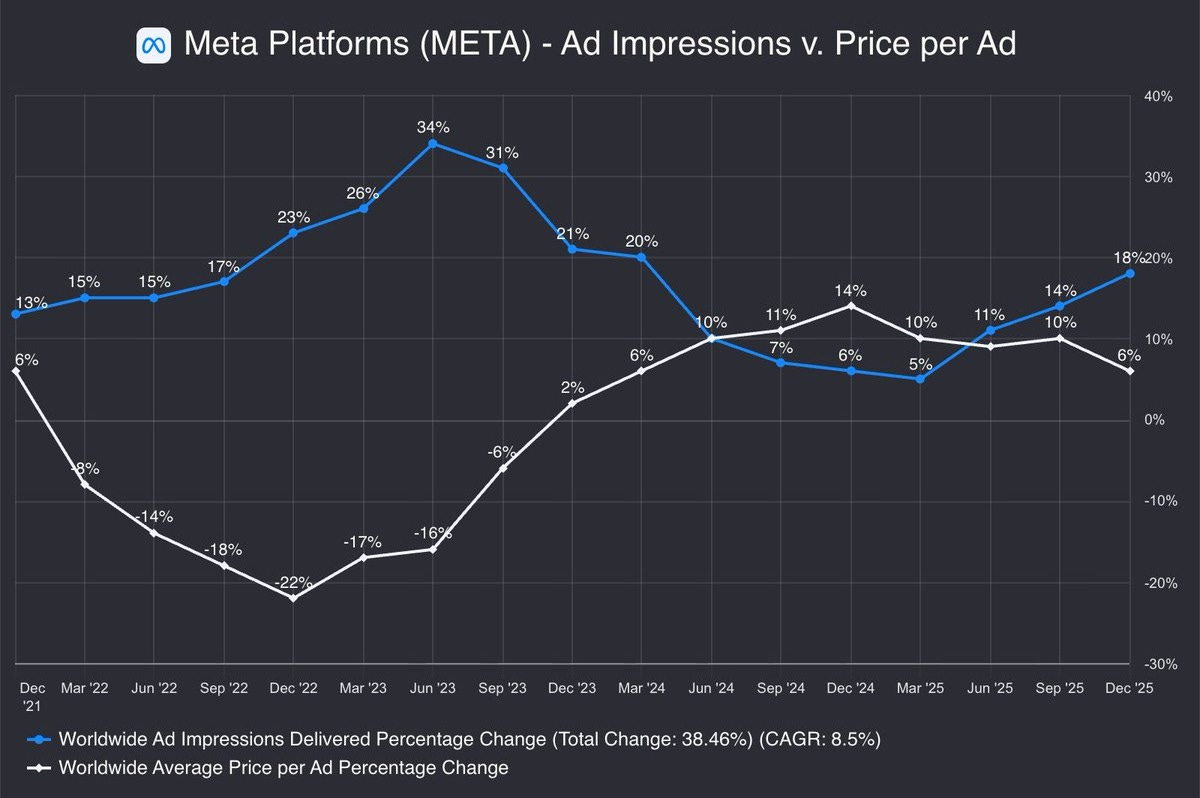
Meta is seeing clear results from its AI investments. Both ad impressions and average ad prices are rising at the same time. In digital advertising, this usually happens only when ads are converting better, and advertisers are getting real value.
AI is improving ad targeting, ranking, and creative performance across Facebook, Instagram, and other Meta platforms. Better performance increases advertiser demand, which supports higher prices and stronger revenue growth.
This shows that Meta is monetizing AI in a practical way. The company is not just spending on AI models, but using them to improve core ad economics and long-term profitability.
META Current Valuation vs 5-Year Mean:
Price/Forward Earnings: 26.1x / 22.1x
Price/Forward Sales: 7.8x / 6.5x
PEG: 1.45 / 1.63
Stocks & ETFs to watch:
META – Meta Platforms (AI-driven advertising)
GOOGL – Alphabet (AI in Search and YouTube ads)
TTD – The Trade Desk (programmatic ads and AI)
PINS – Pinterest (performance-focused visual ads)
SNAP – Snap Inc. (early-stage AI ad tools)
SOCL – Global X Social Media ETF (social media exposure)
Read Also:

Microsoft’s Cloud Backlog Keeps Growing
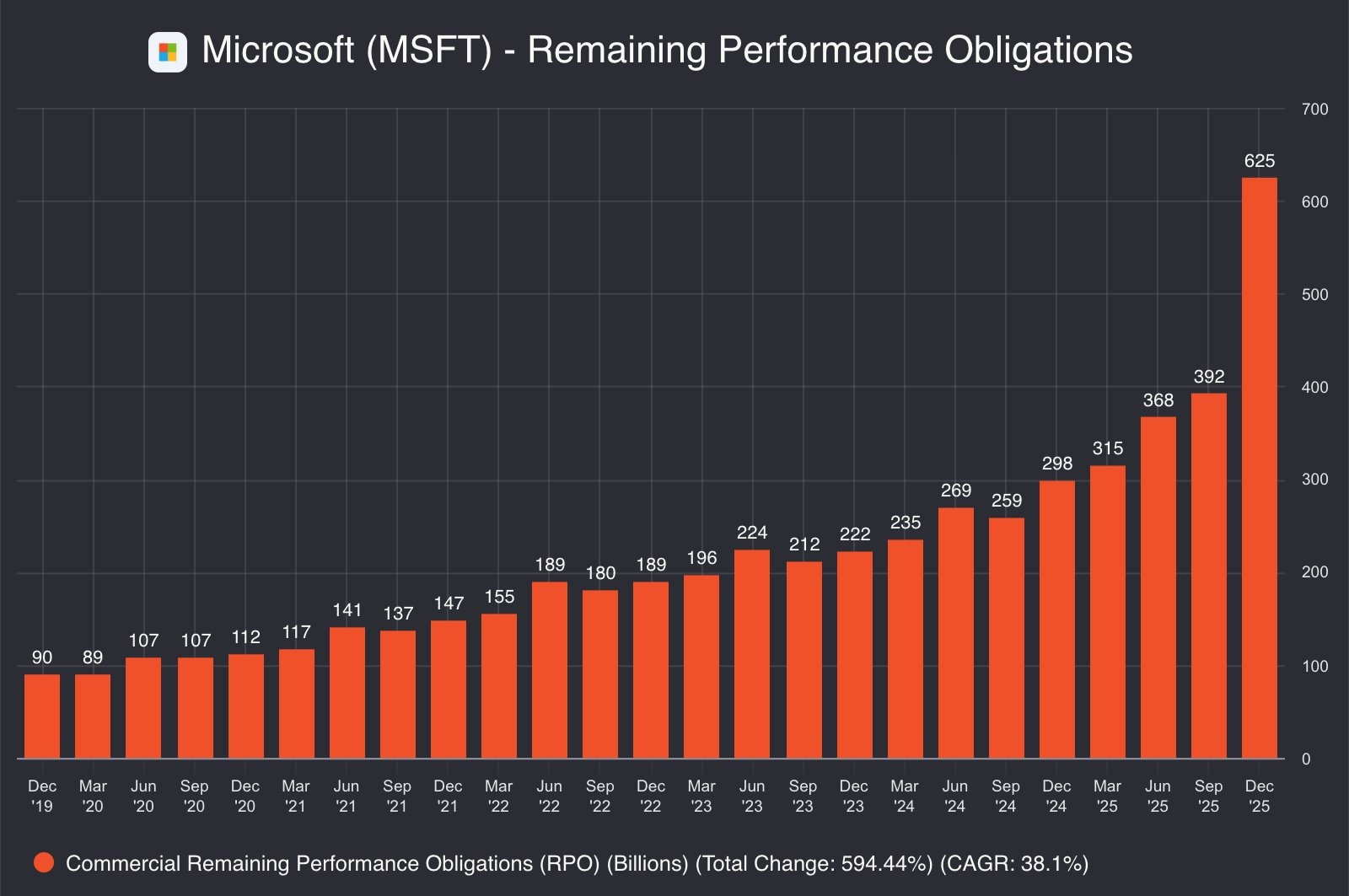
Microsoft’s cloud backlog continues to expand. Commercial Remaining Performance Obligations (RPO) increased strongly year-over-year, showing that more long-term cloud contracts are being signed. RPO represents revenue that is already contracted but not yet recognized, which makes it a useful indicator of future growth.
The growth is mainly driven by Azure, large enterprise deals, and rising demand for AI-related cloud services. A higher backlog improves revenue visibility and supports more stable cash flows over time. This suggests that Microsoft’s cloud business still has a long growth runway.
MSFT Current Valuation vs 5-Year Mean:
Price/Forward Earnings: 24.5x / 30.8x
Price/Forward Sales: 9.0x / 10.6x
PEG: 1.70 / 2.55
Stocks & ETFs to watch:
MSFT – Microsoft (Azure cloud and enterprise software)
AMZN – Amazon (AWS cloud services)
GOOGL – Alphabet (Google Cloud platform)
ORCL – Oracle (enterprise cloud contracts)
SKYY – First Trust Cloud Computing ETF (broad cloud exposure)
Growing Global Copper Demand
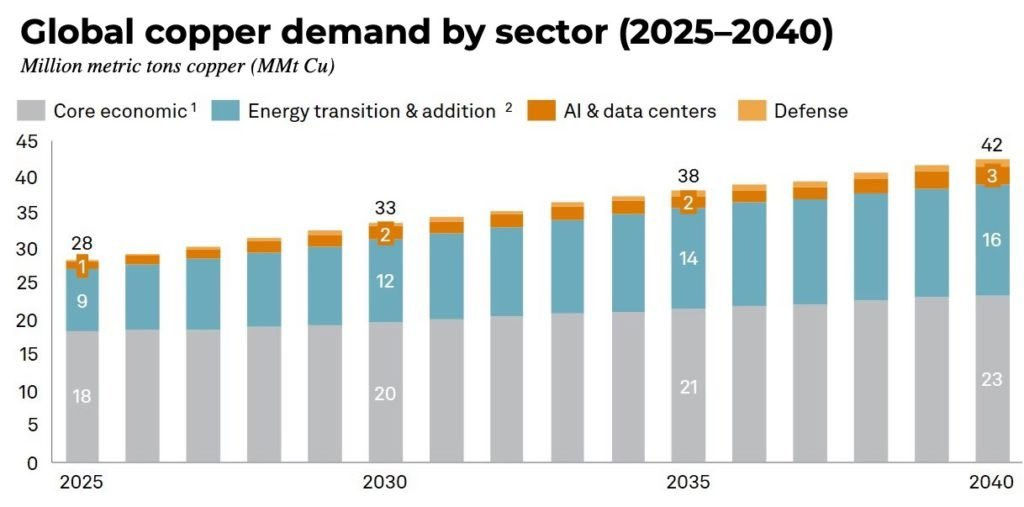
Global copper demand is projected to reach 40+ million metric tons by 2040. The main drivers are electrification, renewable energy, EVs, power grids, and data centers. Copper is hard to replace in these areas.
New large mines are rare, expensive, and take many years to develop. This creates a growing gap between supply and demand. If alternatives like aluminum are not widely adopted, higher copper prices may be needed to balance the market. This sets up a strong long-term case for copper.
FCX Current Valuation vs 5-Year Mean:
Price/Forward Earnings: 24.3x / 19.3x
Price/Price to Sales: 3.3x / 2.3x
PEG: 0.69 / 1.63
Stocks & ETFs to watch:
FCX – Freeport-McMoRan (large copper producer)
BHP – BHP Group (diversified miner with copper exposure)
SCCO – Southern Copper (high sensitivity to copper prices)
RIO – Rio Tinto (global miner with copper growth projects)
COPX – Global X Copper Miners ETF (basket of copper miners)
Data Centers Drive Copper Demand
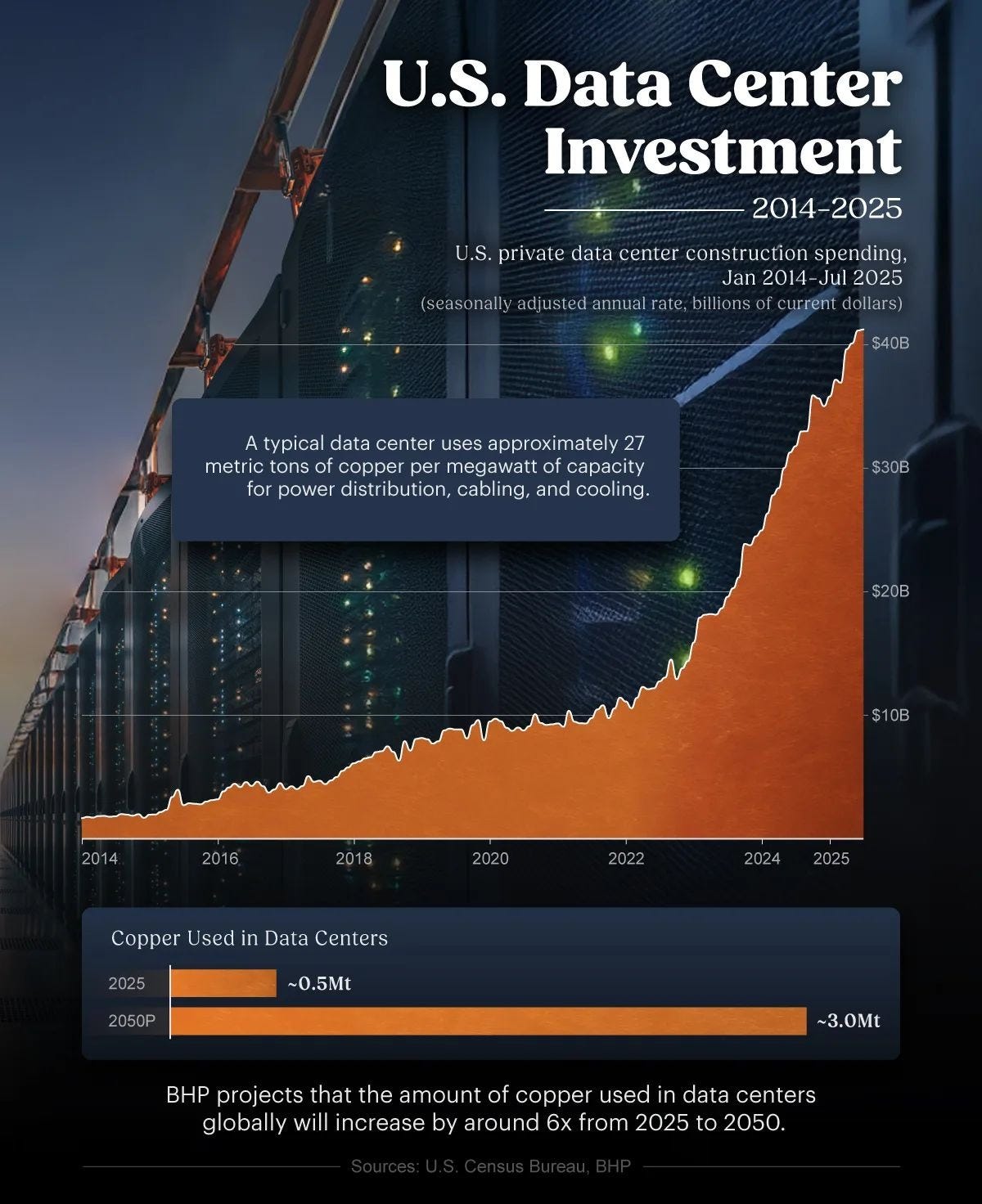
Another note regarding copper demand. Investment in US data centers has accelerated sharply over the past decade, reaching new highs in 2024–2025. The buildout is driven by cloud computing, AI workloads, and rising demand for digital infrastructure. As data center capacity expands, demand for power, cooling, and cabling is rising in parallel.
Copper plays a key role in this trend. A typical data center uses around 27 metric tons of copper per megawatt of capacity. According to BHP estimates, copper used in data centers globally could increase about six times between 2025 and 2050. This adds long-term pressure to copper demand, on top of electrification and energy transition needs.
If supply growth remains limited, data center expansion could become an important structural driver for copper prices over the next decade.
Central Banks Shift Toward Gold
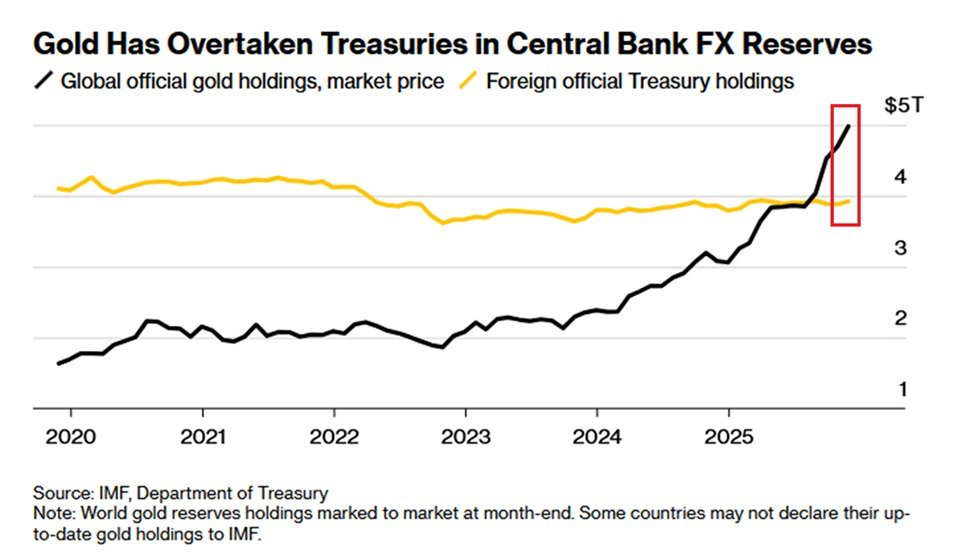
Gold has become a more important asset for central banks. Global official gold holdings have reached around $5.0 trillion, now exceeding foreign official holdings of US Treasuries, which stand near $3.9 trillion. This is the first time in at least 20 years that gold has moved ahead of Treasuries.
Since Q4 2019, the value of central bank gold holdings has tripled. This increase comes from strong gold purchases by central banks and higher gold prices. Over this period, central banks have added about 4,500 tonnes of gold, including some purchases that were not fully reported. At the same time, foreign holdings of US Treasuries have remained mostly flat.
This shift reflects a move toward assets with no counterparty risk and less exposure to sanctions and currency risk. Gold is again playing a central role in reserve management.
Stocks & ETFs to watch:
GLD – SPDR Gold Shares (physical gold exposure)
IAU – iShares Gold Trust (low-cost gold ETF)
B – Barrick Mining Corp (large global gold producer)
NEM – Newmont Corporation (leading gold miner)
AEM – Agnico Eagle Mines (high-quality gold assets)
US Sentiment Signals Slower Growth
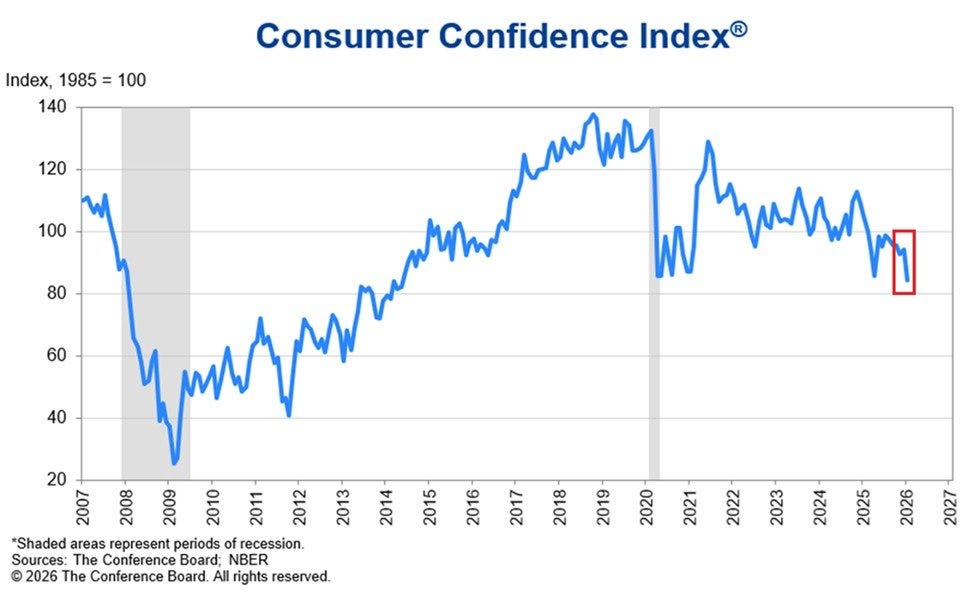
US consumer confidence continues to weaken. The Conference Board Consumer Confidence Index fell sharply to 84.5, the lowest level since 2014. This marks the sixth straight monthly decline and places confidence below levels seen during the 2020 pandemic.
Lower-income households remain the most pessimistic, which raises risks for consumer spending. When confidence stays this low, consumers usually reduce discretionary spending. This can slow economic growth and pressure earnings in consumer-facing sectors.
2026 Growth Outlook
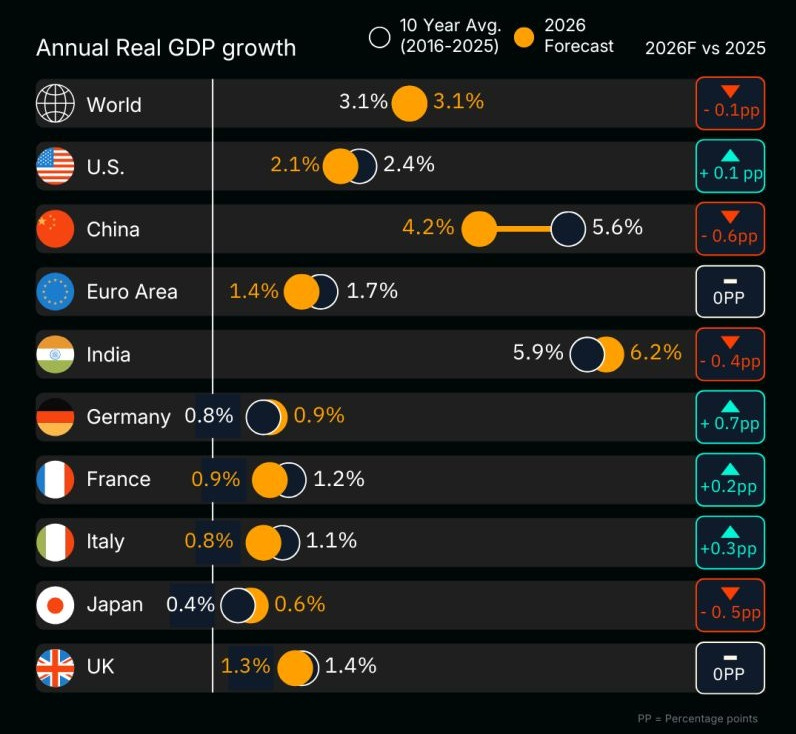
Global economic growth in 2026 is expected to stay modest and uneven across regions. World GDP growth is forecast at around 3.1%, in line with the long-term average. The US is expected to grow at about 2.1%, which is below its 10-year average.
China’s growth is projected to slow compared to recent years, while India remains the fastest-growing major economy, even with a small decline from 2025. In Europe, growth remains weak. Germany, France, and Italy are improving from very low levels. Japan also continues to operate in a low-growth environment.
Overall, the data suggest a fragmented global economy, where growth is concentrated in a few regions rather than broad-based across major economies.
Stocks & ETFs to watch:
INDA – iShares MSCI India ETF (India growth exposure)
FXI – iShares China Large-Cap ETF (China equity exposure)
EEM – iShares MSCI Emerging Markets ETF (emerging markets exposure)
Central Bank Balance Sheets
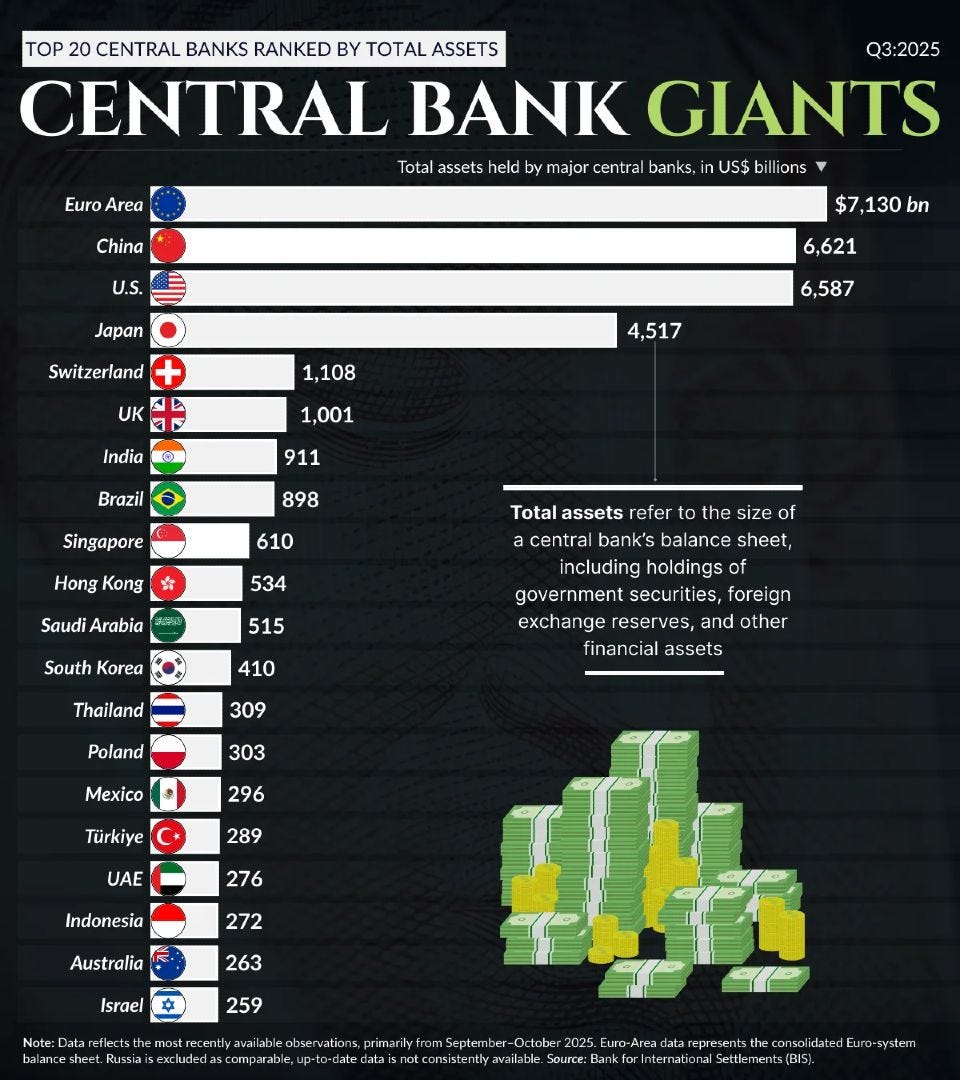
The balance sheets of the world’s largest central banks remain extremely large. The Euro Area, China, and the United States hold the biggest asset bases, each above $6 trillion. These assets include government bonds, foreign exchange reserves, and other financial instruments used to support financial stability.
Japan also remains a major player, while Switzerland and the UK stand out with very large balance sheets relative to the size of their economies. Emerging markets like India and Brazil are smaller in absolute terms, but their central banks have expanded significantly over the past decade.
Stocks & ETFs to watch:
GLD – SPDR Gold Shares (gold exposure linked to central bank reserves)
TLT – iShares 20+ Year Treasury Bond ETF (long-term government bonds)
This is not a financial or investing recommendation. It is solely for educational purposes.